

Are There Any Defenses Available for a Second DUI in Maryland?
Yes. A second DUI in Maryland can still be defended. The case may be more serious because of enhanced penalties, MVA consequences, ignition interlock exposure, and sentencing risk, but the State still has to prove the case. A prior DUI does not automatically make the new charge valid.
TL;DR: Yes, There Are Defenses to a Second DUI in Maryland
A second DUI is more serious than a first DUI, but it is not hopeless. A defense attorney can challenge the stop, detention, field sobriety testing, arrest, breath test, blood test, alleged refusal, MVA paperwork, prior-offense enhancement, and whether the State can prove impairment beyond a reasonable doubt.
- A prior DUI does not prove the new DUI. The State must prove the new case independently.
- The stop can still be illegal. A repeat-offense allegation does not cure a bad traffic stop.
- The test can still be challenged. Breath, blood, and drug evidence may have legal or scientific problems.
- The prior may matter. The defense should examine whether the earlier case legally counts for enhancement.
- MVA deadlines are urgent. License consequences may begin before the criminal case is resolved.
Why a Second DUI in Maryland Is Different
A second DUI charge carries greater risk because prosecutors, judges, probation agents, and the MVA may treat it as a repeat-offense case. That can increase jail exposure, license consequences, ignition interlock requirements, treatment expectations, and sentencing pressure.
But “second DUI” does not mean “automatic conviction.” It means the defense must be more precise, more technical, and more aggressive.
Second DUI Defense Starts With One Rule: Make the State Prove This Case
The most important principle in a second DUI case is simple: the prior case does not prove the new case. The State still has to prove every element of the current DUI, DWI, drugged driving, or per se allegation.
That means the defense should not concede impairment just because the client has a prior DUI. A prior offense may affect sentencing or license consequences, but the new arrest must still be supported by admissible evidence.
Defense 1: Challenge the Traffic Stop
Every DUI case begins somewhere. In many Maryland second DUI cases, the first defense is whether the officer had a lawful basis to stop the vehicle. Police may claim speeding, swerving, lane movement, failing to obey a traffic control device, driving without headlights, a crash, or suspicious behavior.
The defense attorney should compare the officer’s report to video evidence, dispatch notes, body-camera footage, dash-camera footage, road conditions, and the actual traffic law allegedly violated.
- Did the officer observe a real traffic violation?
- Was the alleged violation visible on video?
- Was the stop based on an unreliable tip?
- Was the driving pattern actually consistent with ordinary driving?
- Did the officer stop the wrong vehicle?
If the stop was illegal, the defense may seek suppression of the evidence gathered after the stop. In some DUI cases, suppression can destroy the State’s case.
Defense 2: Challenge the Expansion of the Stop
A lawful traffic stop does not automatically justify a DUI investigation. An officer may stop a car for speeding, equipment issues, or a minor traffic violation. But the officer still needs specific facts to expand the encounter into a DUI investigation.
Officers often point to odor of alcohol, red eyes, nervousness, speech patterns, or an admission to drinking. Those facts may be disputed, exaggerated, or explained by innocent causes.
- Odor of alcohol does not prove impairment.
- Red eyes can come from allergies, fatigue, smoke, or contact lenses.
- Nervousness during a police stop is normal.
- An admission to drinking does not prove illegal intoxication.
- Speech, balance, or confusion may have medical explanations.
Defense 3: Challenge Field Sobriety Testing
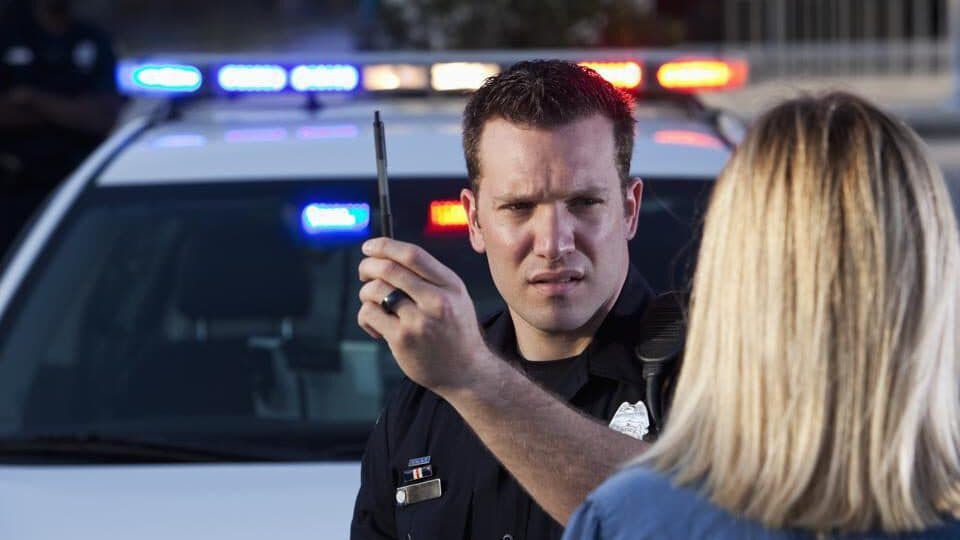
Field sobriety tests are often a major part of a second DUI prosecution. The officer may rely on Horizontal Gaze Nystagmus, Walk-and-Turn, and One-Leg Stand testing to support arrest.
But field sobriety tests are vulnerable. They are performed in stressful, roadside conditions. The officer must properly instruct, demonstrate, observe, and score the tests. A defense attorney should review whether the tests were standardized, fair, and accurately described.
- Was the ground level, dry, and safe?
- Was the lighting adequate?
- Did traffic, police lights, or weather interfere?
- Did the officer ask about injuries, surgeries, neurological issues, or balance problems?
- Was the client wearing appropriate shoes?
- Did the officer demonstrate the test correctly?
- Did the video match the police report?
Defense 4: Challenge the Arrest Decision
Probable cause matters. Even in a second DUI case, the officer must have enough evidence to justify an arrest. A weak stop, vague observations, unfair field sobriety testing, and unsupported conclusions may not be enough.
A defense attorney can argue that the officer jumped to conclusions because of alcohol odor, prior history, or confirmation bias. The arrest must be based on current, specific evidence of impairment, not assumptions.
Defense 5: Challenge the Breath Test
If the case involves a breath test, the attorney should investigate whether the test was properly administered and whether the machine, operator, observation period, and procedures were reliable.
Breath test defenses may include:
- Improper observation period
- Mouth alcohol contamination
- Burping, reflux, vomiting, or GERD issues
- Machine maintenance or calibration problems
- Operator error
- Timing issues between driving and testing
- Rising alcohol defense
- Failure to comply with testing protocols
In a second DUI, the breath number may be the State’s strongest-looking evidence. That is exactly why it must be examined carefully.
Defense 6: Challenge Blood Evidence
Blood evidence can raise complex scientific and legal issues. A defense attorney should examine how the sample was collected, stored, transported, tested, and reported. If hospital blood is involved, the defense must determine whether the result is serum, plasma, or whole blood and whether any conversion theory is reliable.
Blood test defenses may include:
- Chain of custody problems
- Improper collection method
- Hospital serum or plasma issues
- Unreliable conversion assumptions
- Delay between driving and blood draw
- Laboratory documentation gaps
- Expert testimony problems
- Failure to prove impairment at the time of driving
Defense 7: Challenge Drugged Driving Allegations
Some second DUI cases involve drugs, prescription medications, cannabis, or a combination of alcohol and drugs. These cases are often more complicated than alcohol-only DUI cases because the State must connect the substance to unsafe driving or legally relevant impairment.
The mere presence of a medication or substance does not always prove impairment. The defense may investigate dose, timing, prescription status, tolerance, medical use, toxicology limits, DRE conclusions, and whether the driving was actually unsafe.
Defense 8: Challenge Whether the Prior Case Counts
In a second DUI case, the prior offense may affect enhanced penalties, mandatory minimum exposure, license consequences, ignition interlock, and sentencing posture. That means the defense should examine the prior carefully.
Important questions include:
- Was the prior case a conviction or probation before judgment?
- Was the prior offense within the relevant lookback period?
- Was the prior offense from Maryland or another jurisdiction?
- Does the out-of-state offense match a Maryland impaired-driving offense?
- Can the State prove the prior offense with proper records?
- Is the State seeking the correct enhanced penalty?
This is a critical defense area because “second offense” can be legally more complicated than it sounds.
Defense 9: Challenge MVA Suspension or Refusal Issues
A second DUI can trigger serious license consequences. The MVA side may involve a test failure, alleged refusal, ignition interlock, suspension, revocation risk, or repeat-offender consequences.
A defense attorney should review:
- The DR-15 Advice of Rights form
- Whether the officer properly advised the driver
- Whether the refusal was clear and voluntary
- Whether the chemical test was properly requested
- Whether the paperwork was complete
- Whether ignition interlock is available or required
- Whether an administrative hearing should be requested
Defense 10: Build Sentencing Mitigation Early
In a second DUI case, mitigation is not a substitute for defense. But it can be essential. Judges may expect proof that the client is taking the case seriously, especially if there is a prior DUI.
Helpful mitigation may include:
- Alcohol or substance abuse evaluation
- Recommended treatment or education
- MADD Victim Impact Panel
- Ignition interlock compliance
- Proof of employment and family responsibilities
- Medical or mental health context where appropriate
- Character letters
- Community service
- No new violations while the case is pending
Good mitigation can matter at negotiation, sentencing, and probation. It may also help distinguish the client from the worst-case repeat-offender narrative.
Can You Still Get PBJ for a Second DUI in Maryland?
PBJ, or probation before judgment, is often one of the most important issues in Maryland DUI defense. Whether PBJ is available or strategically realistic in a second DUI depends on the prior disposition, timing, facts, judge, prosecutor, and statutory limits.
A defense attorney should review the prior case carefully before making assumptions. If the first case was PBJ, that can affect how the new case is analyzed. If the prior was a conviction, the analysis may be different.
What Makes a Second DUI Harder to Defend?
A second DUI may be harder because the prosecutor may be less willing to offer a lenient resolution, the judge may be more concerned about public safety, and the MVA may impose stronger consequences. There may also be mandatory minimum exposure if the statutory requirements are met.
Factors that can make a second DUI more serious include:
- High breath or blood alcohol result
- Refusal to submit to testing
- Crash or injury
- Minor passenger
- Driving on a suspended or revoked license
- Open container
- Bad driving facts
- Poor performance on video
- Probation violation exposure
- Short time between the first and second DUI
What Makes a Second DUI More Defensible?
A second DUI may become more defensible when the State’s evidence is weak, the stop is questionable, the officer made procedural mistakes, the chemical test has problems, or the video does not support the report.
Defense-friendly facts may include:
- No bad driving
- No crash
- No admission to recent drinking
- Good performance on video
- Medical explanation for observed symptoms
- Weak field sobriety test administration
- Breath test timing issues
- Blood test chain-of-custody issues
- Unclear refusal evidence
- Problems proving the prior offense
Should You Fight a Second DUI in Maryland?
In many cases, yes. Fighting a second DUI does not always mean demanding a full trial. It means reviewing the evidence, protecting constitutional rights, challenging unreliable proof, preserving MVA defenses, and negotiating from strength.
A second DUI can affect jail exposure, license status, insurance, employment, security clearance, immigration, professional licensing, family obligations, and future sentencing risk. The defense should be built early and carefully.
Bottom Line
There are many defenses available for a second DUI in Maryland. The defense may involve the stop, detention, field sobriety testing, arrest, breath test, blood test, drug evidence, MVA paperwork, refusal allegation, prior offense, and sentencing mitigation.
The most important point is this: a second DUI is serious, but it is still defensible. The State must prove the new case, the prior must be legally analyzed, and the license consequences must be handled quickly.
FAQ: Defenses to a Second DUI in Maryland
Can a second DUI be dismissed in Maryland?
Yes. A second DUI can be dismissed if the State lacks evidence, loses a suppression issue, cannot prove impairment, has testing problems, lacks an essential witness, or cannot prove the case beyond a reasonable doubt.
Does a prior DUI mean I will be convicted of the new DUI?
No. A prior DUI may affect sentencing or license consequences, but the State still has to prove the new DUI based on the evidence in the current case.
Can the traffic stop be challenged in a second DUI case?
Yes. The stop can be challenged just like in a first DUI case. If the officer lacked a lawful basis for the stop, the defense may seek suppression of the evidence.
Can breath test evidence be challenged in a second DUI?
Yes. Breath test evidence may be challenged based on observation period problems, mouth alcohol, reflux, timing, machine issues, operator error, maintenance records, or failure to follow required procedures.
Can blood evidence be challenged in a second DUI?
Yes. Blood evidence may raise chain-of-custody, collection, storage, lab testing, serum/plasma conversion, timing, and expert testimony issues.
Can the prior DUI be challenged?
Sometimes. The defense should determine whether the prior case legally counts for enhancement, whether it was a conviction or PBJ, whether it is within the relevant lookback period, and whether the State can prove it properly.
Is ignition interlock required after a second DUI in Maryland?
It may be required or strongly involved depending on the facts, prior record, MVA action, test result, refusal, and applicable law. A lawyer should review both the criminal case and MVA case immediately.
Should I enroll in treatment before court for a second DUI?
Often, proactive evaluation and treatment can help with mitigation, but the correct program and timing should be discussed with counsel based on the facts of the case.