

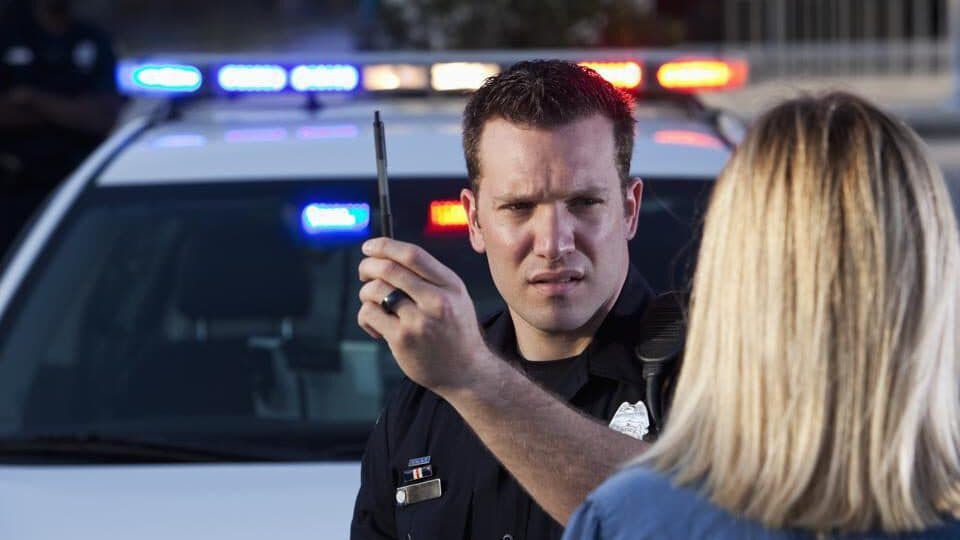
Complete Guide to Breathalyzer Refusal consequences to protect your license, criminal record, your future. Suspension, interlock, administrative hearings, are all either explained fully here or linked to additional information pages that do explain it.
Breathalyzer Refusal Complete Guide
- Key point #1: Replace with your page’s main takeaway.
- Key point #2: Replace with your second takeaway.
- Key point #3: Replace with your third takeaway.
- Key point #4: Replace with your fourth takeaway.
Maryland DUI test refusal
A breath-test refusal (breathlyzer refusal or “chemical test refusal”) triggers fast deadlines, a separate MVA track, and prosecutors love to argue a “negative inference.” The good news: brethalyzer refusal cases are winnable when the story is real, specific, and backed by the right law and evidence.


Maryland DUI Breathalyzer refusal: the 45-day DR-15A and the 270-day suspension
When you choose a breathlyzer refusal, officers typically confiscate your license and issue a temporary paper license (the DR-15A/“paper license”) that is valid for 45 days. If you do nothing, the MVA suspension starts immediately after that window—on the 46th day—and for a first breathlyzer refusal the suspension period is 270 days.
Ignition interlock option: For a breathalyzer refusal, the interlock option is typically 1 year (instead of serving the 270-day suspension), and it comes with strict rules—especially around violations, lockouts, and missed service appointments.
Related reading on this site: MVA hearing strategy • Ignition interlock Maryland • Maryland DUI lawyer • Blood test litigation
Second or third breathalyzer refusal: why the consequences get brutal
Maryland treats a prior alcohol test breathalyzer refusal as a major escalation factor. A second or subsequent breathalyzer refusal is commonly charged with a dramatically longer administrative suspension, and it also becomes a credibility problem in the criminal case because prosecutors argue “you refused before, so you knew exactly what you were doing.”
Maryland DUI breathalyzer refusal: repeat-refusal consequences (real-world)
- License exposure jumps: a second (or subsequent) breathalyzer refusal can lead to a 2-year MVA suspension.
- Interlock becomes harder, not easier: longer programs, tighter compliance expectations, and more risk from any “violation/lockout” reporting.
- Criminal trial inference gets sharper: prosecutors frame repeat refusal as “consciousness of guilt,” not “confusion.”
- CDL / employment collateral: refusals are especially toxic for anyone who drives for work or holds security-sensitive employment.
Breathalyzer Refusal at criminal trial: the “negative inference” and how we fight it
In Maryland, the State can usually introduce evidence that a person refused a chemical test, and then argue an inference that the refusal shows consciousness of guilt. Courts can also give an instruction that permits the jury to consider the refusal along with all other evidence.
Maryland DUI test refusal: what the prosecutor tries to say
“If you were sober, you would have taken the test. You refused because you knew it would read high.” That’s the script. Our job is to make it unreliable, incomplete, and unfair based on the actual facts.
Maryland DUI test refusal: defense strategies that neutralize the inference
- Attack the foundation: Was the advisement given correctly? Did the driver actually understand the DR-15/DR-15A warnings? Language barriers, hearing issues, panic, and officer “speed-reading” matter.
- Make the refusal logically consistent with innocence: Refusal is not “proof.” People refuse for fear, confusion, trauma history, distrust of machines, or distrust of the process.
- Calibration / reliability concern (truthful fact pattern): If the driver asked when the machine was last calibrated (or about accuracy/maintenance) and was brushed off, that supports a rational, non-guilt explanation: “I didn’t understand what I was signing up for, and I didn’t trust it.”
- Rising BAC argument (truthful fact pattern): If the driver had drinks shortly before leaving and believed they were below the limit while driving—but feared their BAC would peak later at the station—refusal can reflect confusion about absorption science, not guilt about impairment while driving.
- Fear/mental state evidence: A client who testifies credibly about fear, hesitation, and confusion (especially during a high-stress arrest environment) can blunt the “guilty mind” claim.
- Medical / physiological issues: Asthma, COPD, shortness of breath, hyperventilation, panic attacks, or inability to provide a long breath sample can create what looks like “refusal,” even when the person is trying. We document this early.
- “I wanted a different test” / needle fear: Some people refuse blood due to needle phobia or medical trauma; others refuse breath due to machine distrust but would consent to blood. If true, that undercuts “you were hiding the number.”
- Police conduct matters: If officers escalated, mocked, rushed, or created confusion about options, that supports the theme: “This wasn’t a calm, informed choice.”
- Flip the fairness lens: When a test isn’t provided despite consent (or the equipment/policy problems are on the State’s side), Maryland law recognizes the logic of an inference that the missing test evidence could have been favorable to the defense. That framing helps in refusal-adjacent fact patterns too.
- Close with the core truth: Even if the jury dislikes a refusal, the State still must prove the DUI elements beyond a reasonable doubt. We keep them on proof, not vibes.
Helpful outbound resources: MVA: Alcohol test failure or refusal • MVA: Ignition interlock program overview • Office of Administrative Hearings (OAH)
Ignition interlock + Intoxalock: attorney advisory counsel, partner pricing, and compliance support
If an ignition interlock program is the right move (either by election or later requirement), we help clients treat it like a compliance project—because that’s exactly what it is. A single missed appointment, lockout, or “hot blow” can create cascading problems.
What the Intoxalock National Attorney Advisory Council is
It’s an attorney feedback group selected by the company to provide input on how interlock services work in the real world—especially how policies and reporting affect clients and the legal process. I serve on that council and use that perspective to push for practical, client-safe features and communications.
How this helps your interlock clients (practically)
- Partner pricing (where available): We can often route clients through attorney-partner enrollment so they’re not paying the “walk-in and guess” rate.
- Cleaner compliance: We coach the “don’t get violated” habits early (mouth alcohol, timing, retests, service intervals, documentation).
- Attorney notifications (where available + with client authorization): Some interlock setups allow the provider to copy counsel on certain compliance events (e.g., lockout/violation triggers), so you can intervene before a small problem becomes an MVA/OAH crisis.
Learn more (outbound): Intoxalock • Top causes of IID lockouts
Get a second opinion before the refusal narrative locks in
The refusal story gets written fast—by the officer, by the prosecutor, and sometimes by the client (accidentally) when they don’t know what matters. If you want a real plan for the MVA track + the criminal track, get a FREE consultation and a FREE case review now.
- DR-15A paper license lasts 45 days. After that expires, an administrative suspension can kick in.
- Refusal can trigger a 270-day suspension. In many cases, you can elect an ignition interlock option instead of sitting out the full time.
- Second / third refusals get harsher fast. Prior outcomes matter, and the MVA consequences escalate.
- In criminal court, refusal can be used against you. The judge/jury can draw negative inferences — but there are ways to neutralize them.