

Maryland Drug Recognition Expert DUI Lawyer
Drug DUI Defense • DRE Challenges • Maryland DUI Lawyer
Charged After a Drug Recognition Expert Evaluation in Maryland?
A Drug Recognition Expert, often called a DRE, is not a magic truth machine. A DRE is a police officer trained to follow a standardized drug impairment evaluation, but the opinion still depends on human observation, assumptions, timing, medical context, toxicology, and whether the protocol was actually followed.
If you were arrested for a Maryland drug DUI, DUI involving prescription medication, cannabis DUI, or a DUI where the officer claimed you were impaired despite a low or zero breath score, the DRE evidence may become one of the central battlegrounds in your case.
TL;DR: Drug Recognition Expert DUI Defense in Maryland
- A Drug Recognition Expert is a trained law enforcement officer, not an independent doctor, toxicologist, or neurologist.
- The DRE process is standardized, but any missed step, bad assumption, medical issue, timing problem, or toxicology mismatch can weaken the State’s case.
- Drug DUI cases often turn on whether the State can prove impairment at the time of driving, not merely the presence of a substance.
- Prescription medication, cannabis, fatigue, anxiety, injury, diabetes, neurological conditions, and medical emergencies can mimic impairment signs.
- A strong Maryland Drug Recognition Expert DUI lawyer should challenge the stop, arrest, DRE protocol, SFSTs, blood testing, lab interpretation, and expert admissibility.
What Is a Drug Recognition Expert in a Maryland DUI Case?
A Drug Recognition Expert is a police officer trained through the Drug Evaluation and Classification Program to evaluate whether a person may be impaired by drugs, alcohol, a medical condition, or some combination of factors. In Maryland DUI cases, DRE evidence often appears when the arresting officer believes the driver looks impaired, but the breath test is low, zero, refused, or inconsistent with the officer’s theory.
The State may try to use the DRE opinion to argue that a driver was impaired by cannabis, prescription medication, depressants, stimulants, narcotic analgesics, inhalants, hallucinogens, dissociative anesthetics, or a combination of substances. But a DRE opinion is still an opinion. It can be wrong. It can be incomplete. It can be based on confirmation bias. It can be undermined by body camera footage, medical records, blood test timing, officer mistakes, and deviations from training.
Why Drug Recognition Expert Evidence Is Vulnerable
DRE cases are vulnerable because they depend on layered assumptions. The officer first assumes impairment. Then the officer assumes alcohol does not fully explain the observations. Then the DRE attempts to classify a drug category based on physical signs, divided-attention tests, statements, vital signs, pupil measurements, and sometimes a toxicology result.
Each layer can be attacked. Was the original stop lawful? Was the detention expanded without reasonable suspicion? Did the officer already decide the driver was impaired before the DRE arrived? Were the field sobriety tests conducted properly? Was the driver injured, exhausted, anxious, diabetic, cold, confused, or suffering from a medical condition? Did the DRE follow the protocol exactly? Did the blood test confirm the claimed drug category? Did the toxicology actually prove impairment at the time of driving?
The 12-Step Drug Recognition Expert Process
The DRE protocol is commonly described as a 12-step process. The State may present this process as scientific and standardized. The defense response is simple: standardized does not mean infallible, and a checklist does not eliminate human error.
- Breath alcohol test
- Interview of the arresting officer
- Preliminary examination and first pulse
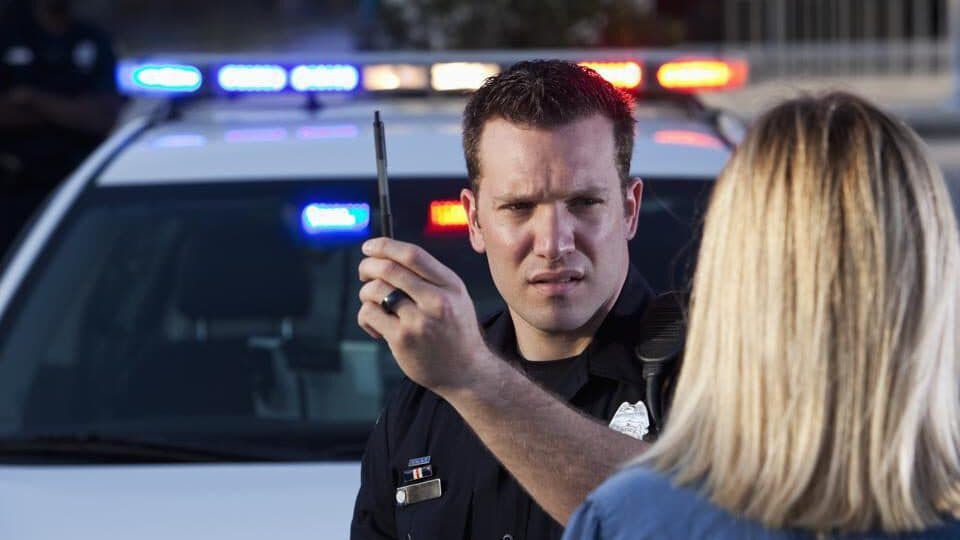
- Eye examinations
- Divided-attention psychophysical tests
- Vital signs and second pulse
- Dark room examinations
- Muscle tone examination
- Injection site examination and third pulse
- Subject statements and other observations
- DRE opinion
- Toxicological examination
A Maryland Drug Recognition Expert DUI lawyer should analyze every step. The defense should not treat the DRE report as a conclusion. It should be treated as a claim that must be tested.
How to Challenge a Drug Recognition Expert in Maryland
1. Challenge the Traffic Stop
The DRE evaluation does not matter if the stop itself was unlawful. Many drug DUI cases begin with ordinary driving behavior: lane movement, speed variation, delayed response to a signal, or an equipment issue. The defense should compare the police report to the video. If the alleged basis for the stop is exaggerated or unsupported, the entire case may be vulnerable.
2. Challenge the Expansion of the Stop
Even if the initial stop was lawful, police still need a lawful basis to expand the stop into a DUI investigation. The defense should examine when the officer shifted from traffic enforcement to impairment investigation, what facts supported that shift, and whether the officer prolonged the stop without sufficient justification.
3. Challenge the Arrest Decision
A DRE is often called after the arresting officer already believes the driver is impaired. That creates a confirmation bias problem. If the DRE interviews the arresting officer before conducting the evaluation, the DRE may begin the process with a prosecution theory already in mind.
4. Challenge Field Sobriety Testing
Standardized Field Sobriety Tests were designed around alcohol impairment detection. Drug DUI cases often involve a more complex interpretation. Fatigue, anxiety, footwear, uneven pavement, flashing lights, weather, age, injuries, neurological issues, language comprehension, and poor instructions can all affect performance.
5. Challenge Pupil Measurements and Eye Examinations
DRE opinions frequently rely on eye signs, pupil size, lack of convergence, horizontal gaze nystagmus, or vertical gaze nystagmus. These observations require proper technique, lighting, distance, timing, and measurement. Small errors can create big problems for the State’s theory.
6. Challenge Vital Signs
Pulse, blood pressure, and body temperature may be affected by stress, fear, exercise, illness, medication, dehydration, pain, or the circumstances of arrest. Vital signs are not drug-specific proof of impaired driving.
7. Challenge Toxicology
A blood test may show the presence of a substance without proving impairment at the time of driving. Cannabis is a classic example. THC and metabolites can raise complex timing and interpretation issues. Prescription medications can be present at therapeutic levels. A lab report does not automatically prove that the driver was unsafe, impaired, or unable to drive normally.
8. Challenge Expert Admissibility
In Maryland, expert opinion testimony must satisfy reliability and admissibility standards. A DRE opinion should not be accepted just because the officer has a certification. The defense can challenge whether the opinion is supported by reliable principles, sufficient facts, proper methodology, and a valid application of the method to the actual case.
Drug DUI Is Not the Same as Alcohol DUI
Alcohol DUI cases often focus on breath alcohol concentration, field sobriety testing, and observations of alcohol use. Drug DUI cases are different. There may be no simple number that proves impairment. Many drugs affect different people differently. Some medications are lawfully prescribed. Some substances remain detectable long after impairing effects have faded.
That is why a Maryland drug DUI lawyer must focus on the difference between use, presence, and impairment. The State must prove impairment connected to driving. The mere presence of a drug, medication, or metabolite is not the same thing as proof beyond a reasonable doubt.
Prescription Medication DUI and DRE Evidence
Prescription medication DUI cases are especially dangerous because good people can be charged even when they took medication exactly as prescribed. Police may assume impairment from pill bottles, statements, medical history, fatigue, slurred speech, or physical symptoms that have innocent explanations.
A prescription medication DUI defense should examine dosage, timing, tolerance, warnings, medical condition, therapeutic use, toxicology, and whether the officer can actually connect the medication to impaired driving. A DRE category opinion does not prove that the driver was impaired by that medication at the time of driving.
Cannabis DUI and Drug Recognition Expert Problems
Cannabis DUI cases are often misunderstood. THC detection is not the same as alcohol breath testing. A person can test positive for cannabis-related compounds without the State being able to reliably prove impairment at the time of driving. Odor, admission of prior use, red eyes, nervousness, or possession evidence does not automatically prove impaired driving.
In a cannabis DUI case, the defense should ask: What was the driving behavior? When was the alleged use? Was there a blood test? What did it test for? Was the result active THC, metabolite, or both? Did the DRE opinion match the toxicology? Were there medical, environmental, or fatigue-related explanations?
Maryland DRE Cases and Blood Testing
Drug Recognition Expert cases often involve blood testing. But a drug DUI blood test must be interpreted carefully. The State may have to prove collection integrity, chain of custody, lab reliability, timing, toxicological meaning, and impairment relevance. A positive blood result may support presence, but presence alone is not always enough.
Christopher G. Moschkin, Esq. focuses heavily on technical DUI evidence, including blood testing, hospital blood draws, scientific admissibility, and the difference between a number on a lab report and proof of actual impairment.
What a Maryland Drug Recognition Expert DUI Lawyer Should Request in Discovery
- DRE face sheet and complete evaluation packet
- DRE rolling logs
- DRE certification and recertification records
- DRE training materials relied upon by the officer
- Body camera and dash camera footage
- Dispatch records and call-out records
- Arresting officer notes and reports
- SFST scoring sheets
- Pupil measurement notes
- Vital sign records
- Blood draw records
- Laboratory reports and chromatograms where applicable
- Chain of custody documents
- Maintenance and calibration records for relevant instruments
- Any communications between the DRE, arresting officer, prosecutor, and lab
Why Hire Christopher G. Moschkin for a Maryland DRE DUI Case?
Christopher G. Moschkin, Esq. is a Maryland DUI defense attorney who attacks DUI cases technically, scientifically, and strategically. He has positioned his DUI defense practice around suppression, forensic challenges, blood test issues, expert admissibility, and the weaknesses in police-created impairment narratives.
His background includes legal, regulatory, technical, and scientific-adjacent experience, including former 1103 GS-14 work involving FDA and NIH contracting and regulatory environments, former Vice President of Jadestone Clinical Research, National College for DUI Defense membership, Super Lawyers DUI/DWI Defense recognition in Maryland, AVVO Client’s Choice awards, and a record of DUI outcomes since 2023 consisting of dismissals, not guilty verdicts, and PBJ outcomes.
If the State is relying on a Drug Recognition Expert, you need more than a lawyer who says “the officer was wrong.” You need a lawyer who can break the opinion apart step by step.
Charged With a Drug DUI in Maryland?
Do not assume the DRE opinion is unbeatable. Call now for a focused defense review of the stop, arrest, DRE evaluation, toxicology, and court strategy.
Call 301-304-6448 Text 240-992-4733Maryland Drug Recognition Expert DUI FAQ
What is a Drug Recognition Expert?
A Drug Recognition Expert is a police officer trained to evaluate suspected drug impairment using a standardized protocol. A DRE is not automatically correct and can be challenged in court.
Can a DRE prove I was impaired by drugs?
A DRE can offer an opinion, but the State still must prove impairment beyond a reasonable doubt. The defense can challenge the stop, arrest, protocol, toxicology, and reliability of the opinion.
What if my blood test was positive?
A positive blood test may show presence of a substance, but it does not always prove impairment at the time of driving. Timing, dosage, drug type, medical context, and toxicological interpretation matter.
Can prescription medication lead to a DUI in Maryland?
Yes. Maryland drivers can be charged based on alleged impairment from prescription medication. But lawful use, therapeutic levels, tolerance, and medical explanations can be important defenses.
Can cannabis cause a DUI charge even if I was not high?
Yes. Cannabis DUI cases may involve odor, admissions, observations, or blood testing. The defense should focus on whether the State can prove actual impairment at the time of driving.
Can a DRE opinion be excluded?
Potentially. Depending on the case, the defense may challenge whether the DRE opinion satisfies Maryland expert testimony standards and whether the officer properly applied the methodology.
Related Maryland DUI Defense Resources
Internal Links
- Maryland Blood Test DUI Lawyer
- Rochkind SFST Expert Challenge Maryland
- Maryland DUI Information Overview
- Maryland MVA DUI Hearings