

DUI Defense Lawyer Maryland: Challenge the Evidence Before Plea Talks
A Maryland DUI arrest does not mean the State has already proven its case. The traffic stop, detention, field sobriety tests, body-camera video, breath test, blood test, police paperwork, and MVA license issues should be reviewed before you decide whether to negotiate, litigate, or go to trial.
Evidence challenged before plea talks. Do not surrender before the fight.
TL;DR: DUI Defense Lawyer Maryland
- A DUI defense lawyer Maryland drivers trust should review the evidence before plea talks. Police reports are not the same thing as proof.
- Maryland DUI cases usually involve two tracks: the criminal court case and the separate MVA/license case.
- The stop matters. Equipment violations, registration issues, lane observations, speeding, and officer positioning can all affect the defense.
- Field sobriety tests can be attacked. HGN, walk-and-turn, and one-leg-stand evidence often depends on instructions, surface, lighting, footwear, medical issues, and officer scoring.
- Breath evidence is technical. Observation periods, machine records, operator procedure, timing, mouth alcohol, reflux, and rising alcohol can matter.
- Blood evidence is not automatically simple. Hospital blood, serum/plasma conversion, chain of custody, timing, and expert assumptions can create litigation issues.
- MVA deadlines move quickly. A Maryland DUI arrest may create license consequences before the criminal case is resolved.
- Past results do not guarantee future outcomes. Every case depends on its facts, evidence, judge, prosecutor, client history, and procedural posture.
DUI Defense Authority in Maryland
DUI/DWI Defense Maryland
2024 & 2026
Client’s Choice Awards
2020, 2021, 2022, 2026

Top Ten DUI Lawyer

Silver Spring

in Maryland
Why Hire a DUI Defense Lawyer in Maryland?
If you are searching for a DUI defense lawyer Maryland, you are probably facing more than a traffic ticket. A DUI arrest can threaten your license, your record, your job, your security clearance, your immigration posture, your CDL, your insurance, your probation status, and your future exposure if there is ever another alcohol-related incident.
The legal system often pressures people to resolve DUI cases quickly. The officer says the tests were failed. The report says there was an odor of alcohol. The paperwork may list a breath number. The prosecutor may offer a plea. But a Maryland DUI defense lawyer should not treat the police narrative as the final word. The defense has to test whether the State can prove the charged offense with admissible, reliable evidence.
DUI defense in Maryland is not just “getting a deal.” Real defense means reviewing the stop, the reason the officer escalated the encounter, the client’s driving, the officer’s observations, the body camera footage, field sobriety test instructions, breath or blood testing, MVA paperwork, and whether the State can connect the evidence to actual impairment at the time of driving.
DUI Defense Lawyer Maryland: Court Case vs. MVA Case
A Maryland DUI arrest commonly creates two separate problems: the criminal case and the administrative license case. They overlap, but they are not the same.
The Criminal DUI Case
The criminal case is where the State tries to prove DUI, DWI, drug impairment, or related offenses. This case may involve trial, motions, plea negotiations, PBJ, probation, fines, jail exposure, treatment conditions, and record consequences.
The MVA License Case
The MVA track concerns administrative license consequences. Refusal, test result, prior alcohol events, and ignition interlock eligibility can affect the driver’s ability to keep driving while the criminal case is pending.
A DUI defense lawyer in Maryland should analyze both tracks immediately. Waiting for the first court date may be too late to make the best MVA decision. A client might need to request a hearing, elect ignition interlock, preserve license arguments, or coordinate the administrative strategy with the criminal defense.
Maryland DUI Defense Under Transportation Article § 21-902
Maryland DUI and DWI charges generally arise under Transportation Article § 21-902. The statutory label matters because DUI, DWI, drug impairment, controlled dangerous substance allegations, commercial driver issues, and transporting-a-minor allegations can create different risk and different defense strategy.
Many people use “DUI” to describe every drunk driving case. Maryland law is more specific. A person may be charged with driving under the influence of alcohol, driving while impaired by alcohol, driving while impaired by drugs or drugs and alcohol, or related offenses. The defense should focus on the exact charge, the exact elements, and the exact evidence the State intends to use.
DUI Defense Lawyer Maryland Stop Challenges
The defense often starts before the DUI investigation even begins. Why did the officer stop the vehicle? Was there a real traffic violation? Was the alleged violation visible on camera? Did the officer claim bad driving when the video shows ordinary driving? Did an equipment or registration stop become a DUI investigation without enough additional facts?
A stop for speeding, expired registration, a headlight issue, tint, tag light, or another equipment violation may be lawful. But that does not automatically justify a full DUI investigation. The officer still needs articulable facts to extend the stop, order field sobriety tests, continue questioning, or arrest the driver.
DUI Defense Review of the Traffic Stop
- Was the stated basis for the stop accurate?
- Does body-camera or dash-camera video confirm the claimed violation?
- Was there dangerous driving, or only a minor traffic/equipment issue?
- Did the officer extend the stop without sufficient DUI indicators?
- Did the officer’s report exaggerate what the video shows?
- Was the client detained longer than the original purpose of the stop required?
A DUI defense lawyer Maryland courts see regularly should know when to challenge the stop, when to challenge the extended detention, and when to use the weakness of the stop as negotiation leverage even if suppression is not guaranteed.
Field Sobriety Test Defense in Maryland DUI Cases
Field sobriety tests are a major part of many Maryland DUI prosecutions, but they are not perfect scientific instruments. They are roadside exercises performed under stress, often at night, with police lights, traffic, uneven pavement, fatigue, anxiety, weather, footwear problems, medical issues, and unclear instructions.
A DUI defense lawyer in Maryland should compare the officer’s report to the body-camera video. Sometimes the report says “failed,” but the video shows a person standing, walking, answering questions, following instructions, and maintaining balance better than the police narrative suggests.
HGN Defense
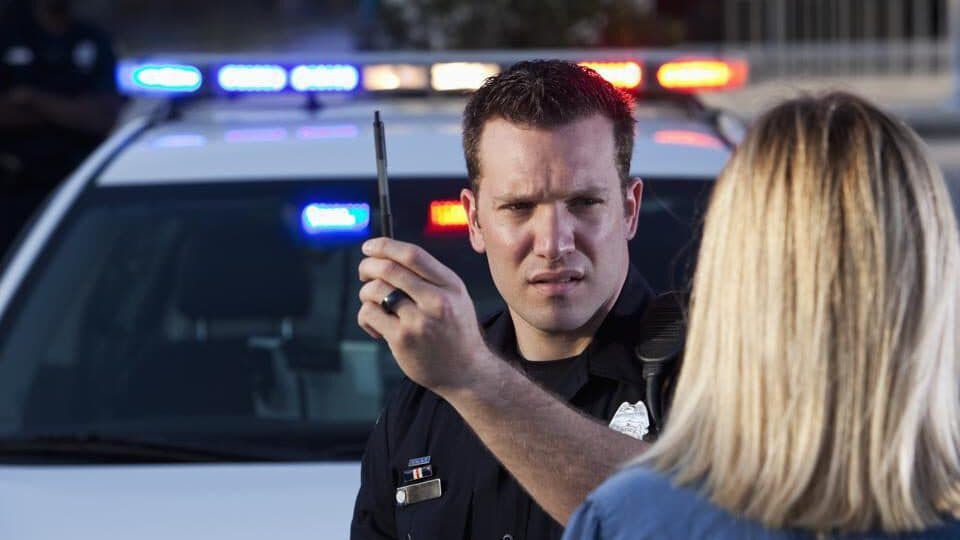
Horizontal gaze nystagmus can be challenged when the officer fails to properly screen for medical conditions, fails to check equal tracking, fails to check resting nystagmus, uses the wrong stimulus distance, moves too quickly, positions the stimulus incorrectly, or performs the test under poor lighting or distracting conditions.
Walk-and-Turn Defense
The walk-and-turn test can be attacked when the demonstration is incomplete, the instructions are confusing, the surface is uneven, the line is imaginary or poor, the turn is not demonstrated correctly, or the officer scores ordinary movement as impairment.
One-Leg-Stand Defense
The one-leg-stand test can be powerful for the defense when the video shows the client performed well. If the officer claims clues but the client appears balanced, coordinated, and compliant, the video may undermine probable cause and trial proof.
Breath Test Defense by a DUI Defense Lawyer in Maryland
Breath evidence can make a DUI case look simple. It is not always simple. A DUI defense lawyer Maryland drivers hire for a breath-test case should review the breath test packet, machine records, operator certification, maintenance documents, simulator solution records, test sequence, observation period, deprivation period, mouth alcohol issues, timing, and whether the result fairly reflects the client’s alcohol level at the time of driving.
Breath testing is especially important when the result is close to a legal threshold, when the stop-to-test delay was significant, when the client had reflux or burping issues, when the officer did not properly observe the client, when the alcohol may have been rising, or when the machine documentation is incomplete.
Blood Test Defense in Maryland DUI Cases
Blood evidence requires a technical defense review. A blood test may involve forensic collection, hospital collection, serum or plasma testing, whole blood assumptions, lab methods, uncertainty, preservatives, anticoagulants, chain of custody, storage, timing, and expert testimony. A number on a medical record is not automatically the same as a reliable forensic blood alcohol result.
A Maryland DUI defense lawyer should ask: What exactly was tested? Was it whole blood, serum, or plasma? Was the sample collected for medical care or forensic prosecution? Who collected it? How was it stored? Was there a proper chain of custody? What conversion assumption is being used? Can the State connect the result to the time of driving? Is an expert trying to overstate what the science can prove?
Blood cases can create strong prosecution leverage, but they can also create strong defense litigation if the State’s number depends on assumptions, conversions, or incomplete records.
MVA License Consequences After a Maryland DUI Arrest
The MVA side of a Maryland DUI case should not be treated as an afterthought. The administrative license case can involve suspension, refusal consequences, ignition interlock, hearing rights, and deadlines that move separately from the criminal court case.
Maryland MVA guidance explains that test refusal can trigger administrative suspension periods, including 270 days for a first refusal and 2 years for a second refusal. Repeat offender and ignition interlock issues can also affect the license strategy. The exact license risk depends on the paperwork, test result or refusal, prior history, and available MVA options.
How a DUI Defense Lawyer Maryland Drivers Hire Can Help With MVA Strategy
- Review the DR-15 and related paperwork.
- Evaluate whether to request an MVA hearing.
- Analyze ignition interlock options.
- Coordinate license strategy with criminal defense strategy.
- Use administrative testimony or records to test the officer’s version of events.
The DUI Defense Process in Maryland
Preserve Deadlines
The first step is protecting court and MVA deadlines. Missing a license deadline can create harm before the criminal case even begins.
Get the Evidence
The defense should obtain police reports, citations, body camera, dash camera, breath/blood records, MVA paperwork, and dispatch or CAD records when relevant.
Analyze the Stop
The defense reviews whether the officer had a lawful basis to stop the vehicle and whether the officer lawfully extended the stop into a DUI investigation.
Attack Weak Testing
Field sobriety tests, breath tests, and blood tests are reviewed for procedural, factual, technical, and scientific weaknesses.
File Motions When Appropriate
Suppression motions, evidentiary challenges, discovery motions, and expert challenges may change the posture of the case.
Negotiate or Try the Case
After the evidence is reviewed, the defense can negotiate from strength or prepare for trial where the facts justify it.
Local Maryland DUI Defense: Roads, Courts, and Prosecutors
DUI defense is legal and technical, but local context matters. A stop on I-270 in Montgomery County may present different factual and strategic issues than a stop near Route 50, Route 15, I-95, Route 1, Baltimore City, Annapolis, College Park, Frederick, Rockville, Silver Spring, Greenbelt, or Columbia.
Road design, traffic conditions, lighting, police department practices, body-camera policies, court scheduling, local prosecutors, and judge-specific expectations can all affect DUI defense strategy. A DUI defense lawyer Maryland clients hire should understand statewide law while still paying attention to the local court where the case will be heard.
The defense should also examine the alleged driving. A case involving a collision, speeding, or extreme lane movement is not the same as a case that began with a headlight, registration, or tag-light stop where the driving was otherwise normal.
Should You Take PBJ in a Maryland DUI Case?
Probation before judgment, or PBJ, can be a valuable result in some Maryland DUI cases. But PBJ is not automatically the best answer in every case, and it should not be accepted blindly before evidence review.
A DUI defense lawyer in Maryland should evaluate PBJ against the facts, MVA consequences, interlock risk, prior record, employment consequences, immigration issues, security clearance concerns, CDL concerns, probation conditions, treatment requirements, and future prior-offense exposure. Sometimes PBJ may be the right resolution. Sometimes the better strategy is to litigate suppression, challenge breath or blood evidence, negotiate a reduction, or try the case.
Call a DUI Defense Lawyer in Maryland Before You Plead
If you were arrested for DUI or DWI in Maryland, the most dangerous mistake is assuming the police report is the case. The report is a starting point. The evidence is the case. The law controls what the State can use. The defense controls whether the State’s assumptions are tested.
Call or text before plea talks. The stop, video, field sobriety tests, breath evidence, blood evidence, and MVA license issues should be reviewed first.
FAQ: DUI Defense Lawyer Maryland
What does a DUI defense lawyer in Maryland do first?
A DUI defense lawyer should protect court and MVA deadlines, obtain the evidence, review the stop, analyze the field sobriety tests, examine breath or blood records, and evaluate whether motions or trial strategy may improve the case.
Is a Maryland DUI case separate from the MVA case?
Yes. The criminal DUI case and the MVA license case are separate tracks. The court case addresses guilt, PBJ, penalties, and probation. The MVA case addresses administrative license consequences, refusal, test results, hearing rights, and interlock options.
Can a Maryland DUI defense lawyer challenge the traffic stop?
Yes. The defense can challenge whether the officer had a lawful basis to stop the vehicle and whether the officer had enough additional facts to extend the stop into a DUI investigation.
Can field sobriety tests be suppressed or attacked?
Yes. Field sobriety evidence may be attacked based on instructions, demonstrations, scoring, surface conditions, footwear, lighting, weather, medical issues, officer mistakes, and body-camera contradictions.
Can a breath test be challenged in Maryland?
Yes. Breath tests can be challenged based on observation period, machine records, operator procedure, timing, mouth alcohol, reflux, rising alcohol, calibration, maintenance, and whether the result proves impairment at the time of driving.
Can a blood test be challenged in a Maryland DUI case?
Yes. Blood evidence can raise issues involving collection, storage, chain of custody, hospital versus forensic testing, serum/plasma conversion, lab method, uncertainty, timing, and expert interpretation.
Should I accept PBJ for a Maryland DUI?
PBJ may be a good outcome in some cases, but it should be evaluated after reviewing the evidence, license consequences, prior history, probation conditions, employment concerns, immigration concerns, and trial risk.
How quickly should I contact a DUI defense lawyer in Maryland?
Immediately. MVA deadlines, video preservation, treatment planning, discovery, and early strategy can matter. Waiting until the first court date may reduce available options.
Helpful Links for Maryland DUI Defense
Internal Links
- Maryland MVA Hearing After DUI
- Ignition Interlock in Maryland
- Blood Alcohol Science and the 1.18 Multiplier
- Recent DUI and Criminal Defense Case Results
- Transparent DUI Defense Pricing
External Links
Client Reviews
Maryland v. Wright — Blood-Test DUI Challenge and Nolle Prosequi After 1.18 Multiplier Defense
In Maryland v. Wright, the defense challenged the State’s attempt to rely on blood-test evidence involving a serum or plasma alcohol result and the commonly used 1.18 serum-to-whole-blood multiplier. This type of forensic DUI issue can be critically important because Maryland DUI blood-test cases may involve hospital blood draws, serum or plasma testing, conversion assumptions, toxicology interpretation, expert testimony, and whether the State can reliably translate a medical blood result into a legally meaningful whole-blood alcohol concentration.
The defense position attacked the scientific reliability of using a generalized multiplier without proper foundation. Under Maryland’s expert-evidence reliability framework, a DUI blood-test opinion should be supported by reliable methodology, case-specific facts, and admissible expert testimony. A one-size-fits-all multiplier can become a serious evidentiary problem when the State cannot establish that the conversion is scientifically reliable as applied to the specific person, specimen, testing method, and facts of the case.
The case resulted in Nolle Prosequi, making it an important example of forensic DUI defense strategy. For people searching for a Maryland DUI blood-test lawyer, DUI expert challenge lawyer, or forensic DUI defense attorney, this result shows why DUI defense can require more than arguing about driving observations. Some DUI cases turn on science, chemistry, toxicology, laboratory interpretation, admissibility, and whether the State’s expert evidence can survive a reliability challenge.
This result is especially important because blood-test DUI cases can carry serious consequences, and many defendants do not realize that hospital blood evidence, serum alcohol results, plasma alcohol results, and whole-blood alcohol results are not automatically interchangeable without a reliable scientific foundation.