

Maryland DUI Information Center: What to Do After a DUI Arrest in Maryland
A Maryland DUI arrest creates two separate fights: the court case and the Motor Vehicle Administration license case. This overview explains the deadlines, penalties, defenses, interlock issues, PBJ concerns, and strategic decisions that matter most after a DUI or DWI charge in Maryland.
2020 • 2021 • 2022 • 2026
Superb Rating
2024 • 2026


TL;DR: Maryland DUI Information You Need Right Now
- A Maryland DUI arrest is not one case. It usually creates a criminal court case and a separate MVA license case.
- The MVA deadline is urgent. You may need to request a hearing within 10 days to avoid an early suspension before the hearing.
- DUI and DWI are different charges. DUI is generally treated as the more serious alcohol-driving offense; DWI is usually charged as impaired driving.
- PBJ is not “nothing.” Probation before judgment may avoid a formal conviction in court, but it can still trigger consequences, including interlock issues.
- Interlock rules changed. Maryland’s expanded ignition interlock law has made interlock analysis central in alcohol-related DUI and DWI cases.
- Every fact matters. The stop, detention, field sobriety tests, bodycam, breath test, blood test, lab method, medical conditions, and police paperwork can all become defense issues.
- Early defense work matters. A strong DUI defense starts before the first court date, not after the State has already shaped the case.
This Maryland DUI information overview is designed as a practical starting point for people charged with driving under the influence, driving while impaired, refusing a breath test, failing a breath test, driving after an MVA suspension, or facing ignition interlock consequences after an alcohol-related traffic arrest. It is also a hub for deeper DUI defense resources on duidefensemd.com.
Christopher G. Moschkin, Esq. focuses heavily on Maryland DUI defense. His practice emphasizes technical DUI litigation, forensic review, body camera analysis, field sobriety testing errors, breath and blood testing challenges, MVA hearing strategy, and courtroom defense aimed at dismissals, acquittals, reduced exposure, and the best legally available outcome.
Maryland DUI Information Starts with the Two-Track Problem
Many drivers think a DUI begins and ends in court. That is wrong. In Maryland, an alcohol-related DUI arrest often creates two tracks:
Track one is the criminal court case. This is where the State must prove the DUI, DWI, or related charges beyond a reasonable doubt. The court case can involve jail exposure, fines, probation, treatment conditions, ignition interlock conditions, points, PBJ eligibility, and a public case record.
Track two is the MVA administrative license case. This is where the State attempts to suspend or restrict the person’s Maryland driving privilege based on a test refusal, a breath test result, or other administrative-per-se paperwork. This process is deadline driven. Waiting for the first court date can be a costly mistake.
Maryland DUI Information: What to Do Immediately After a DUI Arrest
The first priority after a Maryland DUI arrest is to preserve options. A driver should identify every paper received from the officer, including citations, an advice of rights form, an order of suspension, a temporary license, and any paperwork related to a breath test or refusal. The words on those forms matter. The dates matter. The officer’s signature, certification, probable cause statement, test election, and suspension language may all matter.
The second priority is to protect the license. For many people, the most immediate harm from a DUI arrest is not the court case; it is losing the ability to drive to work, court, treatment, medical appointments, childcare, school, or military and federal contractor obligations. A defense lawyer should evaluate whether to request an MVA hearing, whether interlock is the better short-term option, whether the paperwork is defective, and whether there are facts that support contesting the proposed suspension.
The third priority is to preserve evidence. DUI cases are often won or lost through details: how long the officer followed the vehicle, whether the stop was lawful, what was visible on bodycam, whether the client’s speech was actually slurred, whether the officer gave the standardized field sobriety instructions correctly, whether the breath test observation period was valid, whether the blood draw was medically and legally supportable, and whether the officer exaggerated ordinary nervous behavior into “impairment.”
Maryland DUI Information: DUI vs. DWI in Maryland
Maryland uses different statutory language for alcohol-related driving offenses. The most common charges are driving under the influence of alcohol and driving while impaired by alcohol. In everyday speech, people often call everything a “DUI.” In Maryland court, the distinctions matter.
DUI generally refers to driving under the influence. It is usually treated as the more serious alcohol-related driving charge. Prosecutors may rely on a breath result, officer observations, driving behavior, alleged field sobriety performance, admissions, odor of alcohol, video, and other evidence to try to prove the charge.
DWI generally refers to driving while impaired. It may involve a lower level of alleged impairment than DUI, but it is still serious. A DWI can still create license consequences, points, court exposure, insurance problems, employment problems, and immigration or professional licensing concerns depending on the person’s circumstances.
The defense analysis is not simply “DUI bad, DWI less bad.” A negotiated reduction from DUI to DWI may be valuable in some cases. In other cases, the correct strategy is to fight for dismissal, acquittal, suppression, exclusion of scientific evidence, or a resolution that avoids a legally damaging finding. The right approach depends on the facts, the county, the judge, the prosecutor, the client’s record, the client’s license status, and the strength of the evidence.
Maryland DUI Information: The MVA Hearing and the 10-Day License Deadline
One of the most important Maryland DUI information points is this: the MVA deadline can arrive fast. If a driver receives an order of suspension after an alcohol test failure or refusal, the driver may need to request an MVA hearing within 10 days to keep the temporary driving privilege from expiring before the hearing. A hearing request may still be available after 10 days but before 30 days in many cases, but waiting can create an avoidable suspension before the hearing date.
The MVA hearing is not the same as the criminal trial. The administrative law judge does not decide whether the person is guilty of DUI in criminal court. Instead, the hearing usually focuses on administrative issues such as whether the officer had reasonable grounds, whether the driver was properly advised, whether the driver refused, whether the test result met a triggering threshold, whether the paperwork supports suspension, and whether statutory defenses or limitations apply.
A strong MVA strategy must be practical. Sometimes the right answer is to fight the suspension. Sometimes the right answer is to enter interlock quickly to preserve driving ability. Sometimes the paperwork creates leverage. Sometimes the administrative result can affect court strategy. A Maryland DUI lawyer should look at the MVA case and the court case together.
MVA Hearing Strategy Questions
- Was the hearing request sent within the correct deadline?
- Did the officer properly complete the suspension paperwork?
- Was the person properly advised of sanctions for refusal or test failure?
- Was there a valid breath test result?
- Was the alleged refusal actually a refusal?
- Does interlock protect the client better than litigating the MVA suspension?
- Can the MVA hearing create testimony useful for the court case?
Maryland DUI Information: Ignition Interlock After a DUI or DWI
Ignition interlock is now one of the central issues in Maryland DUI defense. An ignition interlock device requires a driver to provide a breath sample before starting a vehicle and at intervals while driving. Interlock may be used as an alternative to suspension in some administrative situations, but it may also be imposed or required as a result of the court case or Maryland’s expanded interlock law.
The key point is that interlock is no longer a side issue. For many Maryland DUI cases, interlock planning must begin immediately. A driver may need to know whether installation preserves work transportation, whether the person has access to a qualifying vehicle, whether a work vehicle creates complications, whether the person is eligible for a restricted license, and whether interlock timing can reduce the overall disruption.
Interlock can also affect plea strategy. A client may believe that probation before judgment avoids all DUI consequences. That assumption can be dangerous. PBJ may help with the court record in some cases, but it does not automatically erase administrative, licensing, interlock, immigration, employment, security clearance, insurance, or professional consequences.
Maryland DUI Information: Probation Before Judgment Is Not a Magic Eraser
Maryland probation before judgment, often called PBJ, is one of the most misunderstood outcomes in DUI court. PBJ can be a powerful result in the right case because the court strikes the guilty finding and places the person on probation instead of entering a final conviction. For many first-time defendants, PBJ may reduce long-term damage.
But PBJ is not “case dismissed.” It is not a not guilty verdict. It is not an expungement. It may still appear in court records. It may still matter to immigration authorities, employers, licensing boards, security clearance reviewers, insurance carriers, future prosecutors, and the MVA. In alcohol-related driving cases, PBJ can also be connected to ignition interlock obligations under current Maryland law.
A good Maryland DUI lawyer does not simply ask, “Can we get PBJ?” The better questions are: Is PBJ the best outcome available? Is the State’s evidence weak enough to fight? Is there a suppression issue? Is there a breath or blood test problem? Is the client exposed to enhanced penalties? Will PBJ create a hidden licensing problem? Can the case be reduced to a non-alcohol traffic citation? Can the State be forced to prove what it claims?
Maryland DUI Information: Common DUI Defense Issues
DUI defense is technical. A DUI case is not automatically proven because a police officer used the word “impairment.” The State has to prove the elements. The defense can attack the stop, the detention, the investigation, the field sobriety tests, the chemical test, the officer’s credibility, the timeline, the video, the paperwork, and the scientific assumptions behind the State’s theory.
Maryland DUI Defense Issue: The Traffic Stop
The first major issue is whether the officer had a lawful basis to stop the vehicle. Police often cite speeding, lane movement, equipment issues, failure to signal, a tag problem, or a driving pattern. But bodycam, dashcam, CAD notes, GPS, road design, lighting, weather, traffic, and officer vantage point may reveal that the alleged violation was exaggerated, mistaken, or legally insufficient.
Maryland DUI Defense Issue: Expansion of the Stop
Even when the initial stop is valid, the defense may challenge whether the officer had a lawful basis to expand the stop into a DUI investigation. The officer needs more than a hunch. Odor of alcohol alone does not always prove impairment. Red eyes may have innocent explanations. Nervousness is normal during police contact. Late-night driving is not a crime. The defense should evaluate when the traffic mission ended and whether the DUI investigation became unlawfully prolonged.
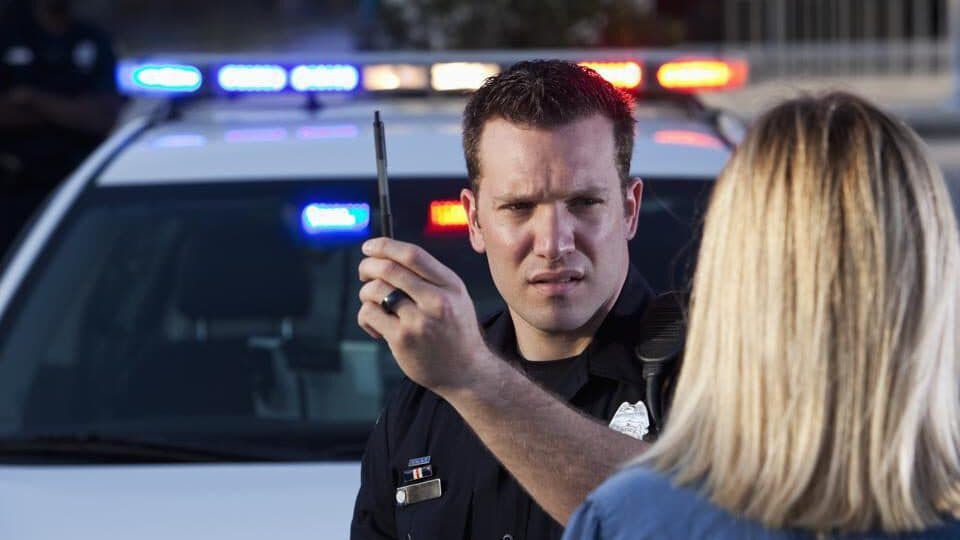
Maryland DUI Defense Issue: Field Sobriety Testing
Standardized field sobriety tests are often treated as scientific by police, but they are vulnerable to attack. The horizontal gaze nystagmus test can be affected by improper stimulus distance, incorrect angle estimation, poor lighting, medical conditions, lack of smooth pursuit scoring errors, and officer technique. The walk-and-turn test can be distorted by footwear, surface conditions, slope, weather, weight, injury, anxiety, age, fatigue, and confusing instructions. The one-leg stand test can punish people for balance issues that have nothing to do with alcohol.
Maryland DUI Defense Issue: Breath Testing
Breath testing depends on procedure, machine reliability, observation periods, calibration, simulator solutions, operator compliance, mouth alcohol concerns, radio frequency issues, medical conditions, and whether the State can lay the proper foundation for admissibility. A reported number is not the end of the analysis. The defense should review the machine records, test ticket, maintenance history, operator certifications, and the timeline between driving and testing.
Maryland DUI Defense Issue: Blood Testing
Blood testing creates a different set of issues. The defense should evaluate who drew the blood, why it was drawn, whether there was consent or a valid warrant, whether the sample was hospital serum/plasma or forensic whole blood, whether conversion assumptions were used, whether chain of custody is reliable, whether the lab method is valid, and whether the State’s expert can survive a serious admissibility challenge. Blood DUI defense is not just chain of custody; it can involve attacking the science itself.
Maryland DUI Defense Issue: Body Camera Contradictions
Police reports often use stock language: slurred speech, bloodshot eyes, odor of alcohol, poor balance, confused responses, and failed tests. Body camera footage can tell a different story. A person may be polite, coherent, steady, responsive, and careful. The officer’s written report may omit favorable facts. Effective DUI defense uses video aggressively.
Maryland DUI Information: Repeat DUI, Prior Offenses, and Enhanced Penalties
Prior DUI and DWI history can change the entire case. Repeat-offender analysis affects plea negotiations, sentencing exposure, MVA consequences, ignition interlock obligations, treatment expectations, prosecutor posture, and judicial risk tolerance. The defense must identify whether the prior event was a conviction, PBJ, out-of-state guilty finding, administrative suspension, refusal, or unrelated alcohol education event.
Out-of-state cases can create complicated questions. A Virginia guilty finding, a District of Columbia disposition, a federal DUI, or a military-related driving offense may not map neatly onto Maryland terminology. A lawyer should obtain the actual record, not rely on a client’s memory or a prosecutor’s summary. The difference between 2005, 2008, and 2025 matters. So does the difference between PBJ and conviction.
In repeat DUI cases, the defense should scrutinize notice of enhanced penalties, whether the State properly pleaded and proved prior offenses, whether the prior qualifies under the specific statute at issue, whether the prior was constitutionally valid, and whether the timing rules apply. A prior record may be real, but that does not mean the State can use it exactly the way it wants.
Maryland DUI Information: Treatment, Evaluations, and Mitigation
Treatment is not a substitute for legal defense, but it can matter. A prompt alcohol evaluation, education program, MADD Victim Impact Panel, abstinence monitoring, therapy, or medically appropriate treatment plan may help show the court that the client is serious, stable, and not a future risk. This can be especially important when the facts include an accident, high BAC allegation, refusal, child passenger, repeat history, probation status, or professional licensing concern.
The timing matters. Judges and prosecutors often view proactive steps differently from last-minute steps taken only after a bad plea offer. A client who gets evaluated immediately, follows recommendations, documents compliance, and avoids new problems creates a stronger mitigation record. But treatment decisions should be coordinated with defense strategy so the client does not accidentally create damaging admissions or unnecessary records.
Maryland DUI Information: Court Process After a DUI Arrest
A Maryland DUI case usually begins in District Court. The first court date may be a trial date, not merely an arraignment or scheduling conference. That surprises many defendants. If the lawyer enters the case close to trial, a postponement may be necessary to obtain discovery, review bodycam, subpoena witnesses, investigate the stop, consult experts, prepare motions, and allow the client to complete meaningful mitigation.
Discovery may include police reports, citations, body-worn camera footage, dash camera footage, 911 calls, CAD logs, breath test records, intoximeter maintenance records, officer training records, drug recognition expert materials, lab reports, blood records, warrants, hospital records, and calibration documents. A defense lawyer should not assume the State’s file is complete.
Motions may include motions to suppress the stop, suppress statements, suppress field sobriety evidence, exclude breath or blood test results, compel discovery, exclude expert testimony, challenge the foundation for scientific evidence, or prevent unfair use of prior records. In the right case, motion practice can change the entire negotiation posture or eliminate key evidence before trial.
Maryland DUI Information: When to Fight and When to Negotiate
Not every DUI case should resolve the same way. Some cases should be tried. Some cases should be attacked through suppression motions. Some cases should be negotiated toward DWI, reckless driving, negligent driving, or a non-incarcerable traffic citation. Some cases require a mitigation-first approach because the evidence is strong but the sentencing exposure can be controlled. Some cases require expert-level scientific litigation because the State’s theory depends on a breath number, blood conversion, or drug recognition claim that can be challenged.
The decision should be evidence-driven. A lawyer should compare the police report to the video, review the chemical testing documents, identify legal defects, evaluate the judge and jurisdiction, consider the prosecutor’s likely position, and understand the client’s real-world risks. For one client, avoiding jail may be the top priority. For another, avoiding a conviction may matter most. For a federal contractor, security clearance concerns may dominate. For a non-citizen, immigration analysis may be essential. For a CDL holder, the licensing consequences may be devastating.
Maryland DUI Information: Local DUI Defense Matters
DUI defense in Maryland is statewide, but local practice matters. Montgomery County, Prince George’s County, Frederick County, Howard County, Anne Arundel County, Baltimore City, Baltimore County, and the Eastern Shore do not all feel the same in court. Prosecutor policies, police agencies, judge expectations, bodycam practices, scheduling norms, treatment expectations, and plea leverage can vary.
Local roads matter too. A stop on Georgia Avenue, Connecticut Avenue, Route 355, I-270, the Beltway, Route 50, Route 1, Baltimore-Washington Parkway, Route 29, or a downtown entertainment corridor often has its own enforcement context. DUI defense becomes stronger when the lawyer understands not only the statute but the roadway, the police agency, the courthouse, and the practical local dynamics.
Maryland DUI Information Resource Hub
This overview page is the starting point. Use the internal links below to continue into specific DUI topics:
Maryland DUI Information FAQ
What is the first thing I should do after a Maryland DUI arrest?
Identify your MVA deadline, preserve every paper the officer gave you, avoid discussing facts with anyone except your lawyer, and get legal help before the license deadline passes. The court date may not be the first important deadline.
Do I really have only 10 days after a DUI arrest in Maryland?
In many alcohol-related MVA suspension cases, requesting the administrative hearing within 10 days helps preserve the temporary driving privilege while waiting for the hearing. There may be a longer outer deadline to request the hearing, but waiting can create an avoidable suspension.
Is DUI worse than DWI in Maryland?
Generally, DUI is treated as the more serious alcohol-related driving offense, while DWI is usually impaired driving. But both can carry serious court, license, interlock, employment, insurance, and record consequences.
Can I get probation before judgment for a Maryland DUI?
PBJ may be available in many first-offense cases, but it is not automatic. PBJ is also not the same as a dismissal or acquittal. It may still carry consequences, including interlock and collateral consequences.
Does PBJ avoid ignition interlock in Maryland?
Do not assume that PBJ avoids interlock. Maryland’s expanded alcohol-related interlock rules make interlock analysis necessary even when the court outcome is not a traditional conviction.
Can a Maryland DUI breath test be challenged?
Yes. Breath testing can be challenged based on observation period, machine records, calibration, operator error, maintenance, mouth alcohol, medical issues, timing, and whether the State can lay the proper foundation.
Can a Maryland DUI blood test be challenged?
Yes. Blood testing may involve warrant issues, consent issues, chain of custody, sample type, serum-to-whole-blood conversion, lab method, expert admissibility, and scientific reliability.
Can police use field sobriety tests against me?
Police can try, but field sobriety tests are frequently challengeable. The defense should review instructions, surface conditions, lighting, footwear, medical conditions, bodycam, officer technique, and scoring.
Should I fight my Maryland DUI or take a plea?
That depends on the evidence and your risk profile. A strong DUI strategy evaluates the stop, detention, field tests, chemical test, bodycam, priors, license status, employment risks, and the local court environment before deciding.
Can a DUI affect my job or security clearance?
It can. Federal contractors, cleared employees, nurses, CDL drivers, teachers, lawyers, pilots, military members, and licensed professionals should treat DUI defense as both a court problem and a career-risk problem.
Helpful Maryland DUI Links
Internal DUI Defense Resources
- What to Do After a DUI Arrest in Maryland
- DUI License Suspension Maryland
- Ignition Interlock Maryland
- Repeat DUI Offender Maryland
- Maryland DUI Areas Served