
–>
TL;DR — DWI attorney strategy
If you want a DWI attorney who litigates hard, I focus on four lanes that routinely move cases to not guilty or nolle prosequi: (1) scientific attacks on breath/blood/SFSTs, (2) constitutional attacks (stop, seizure, search, statements), (3) Atkinson “sleeping in the car” / actual physical control prongs, and (4) speedy trial enforcement (Hicks/Rule 4-271 + constitutional Barker balancing).
Call for a FREE consultationRequest a FREE case review
DWI attorney built for science + constitutional litigation
A lot of “DWI defense” is negotiation theater. My work is different: I build litigation-ready attacks that force the State to prove every element beyond a reasonable doubt — or drop the case. If you’re searching for a DWI attorney in Maryland, this page shows the actual levers I pull: breath test defense, blood test litigation, field sobriety test challenges, Fourth Amendment suppression, Atkinson actual physical control, and speedy trial violations.
Scientific attack first
Constitutional attack always
Atkinson “sleep in car” prongs
Hicks + Barker speedy trial
How a DWI attorney gets to “not guilty” or “nolle prosequi”
In real cases, the fastest path to nolle prosequi is usually making the State hate its own evidence. The cleanest path to not guilty is forcing the factfinder to confront reasonable doubt in the building blocks: what the officer did, what the science can’t prove, and what the Constitution forbids.
- Suppression wins (illegal stop/seizure/search; coerced statements) → critical evidence excluded → State often cannot proceed.
- Science collapses (breath/blood chain, uncertainty, protocols, extrapolation) → reasonable doubt → not guilty or dismissal posture.
- Actual physical control fails (Atkinson “shelter doctrine”) → State can’t prove the driving/control element.
- Speedy trial enforcement (Hicks date / Rule 4-271; plus constitutional Barker factors) → dismissal leverage that changes outcomes.
- Witness + proof problems (missing videos, inconsistent reports, unavailable witnesses) → credibility damage → nolle or acquittal risk for State.
Scientific attacks your DWI attorney should be making
“DWI” is often sold as certainty. It isn’t. Alcohol/drug impairment proof is a chain — and chains break. My scientific defenses are built around measurement validity, protocol compliance, and uncertainty.
Breath test defense: reliability, calibration, physiology
- Instrument + maintenance: calibration/verification records, out-of-tolerance events, operator compliance, environmental factors.
- Physiology + variability: mouth alcohol risk, breathing pattern effects, GERD/medical confounders, temperature/partition assumptions.
- Timing: what was the actual driving time vs. test time — and what the State is assuming without proof.
Blood test litigation: chain-of-custody, lab methods, uncertainty
- Chain-of-custody gaps: collection, sealing, labeling, storage temperature, transport, receipt logs.
- Lab method issues: validation, calibration curves, controls/blanks, carryover, analyst notes, uncertainty ranges.
- Retrograde extrapolation: when the State tries to “math” its way to a number — without individualized proof.
Field sobriety test challenges: SFST compliance and real-world flaws
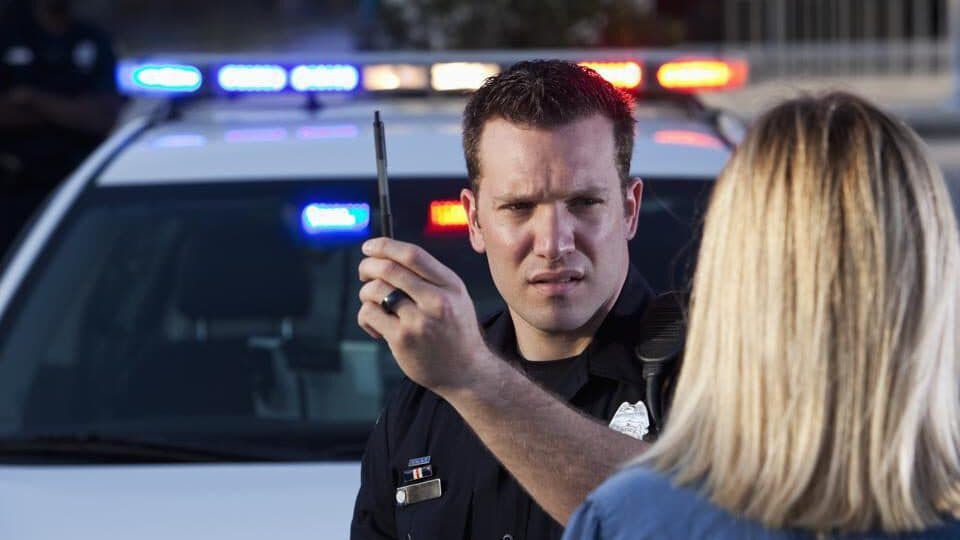
SFSTs are not magic — they’re standardized only when administered correctly, and the roadside is where “standardized” goes to die. I attack instructions, scoring, conditions, medical issues, footwear, surfaces, lighting, language, and confirmation bias. For the underlying SFST materials, see NHTSA’s SFST resources. NHTSA SFST resources.
Constitutional attacks a DWI attorney uses to suppress evidence
The Constitution is not “technicalities.” It is the rulebook for how the government can investigate you. If the State broke the rules, the remedy is exclusion — and that’s how weak cases die.
Fourth Amendment: stop, seizure, search
- Traffic stop basis: whether reasonable suspicion actually existed, and what the video shows vs. what the report claims.
- Scope + duration: whether the stop was unlawfully extended to hunt for impairment without lawful basis.
- Search issues: vehicle searches, consent problems, and warrant exceptions that don’t fit the facts.
Fifth + Sixth Amendment: statements, counsel, confrontation
- Statements: custodial interrogation without proper advisements; coercion; “you have to answer” pressure.
- Confrontation: proving the State’s lab and records through the right witnesses and admissible foundations.
If you want a DWI attorney who litigates, your case plan should include at least one suppression angle to test early — even if the prosecutor is “friendly.” Friendly prosecutors still try cases.
Atkinson attacks: “sleeping in a car” prongs and actual physical control
Maryland DUI/DWI law includes a separate concept from “driving”: actual physical control. The shelter doctrine matters because public policy should not punish someone for choosing to stop and sleep rather than drive. The key case is Atkinson v. State (331 Md. 199 (1993)) and the “actual physical control” factor analysis. A later Court of Appeals discussion applying Atkinson in the administrative context is also instructive.
Atkinson v. State (case text)•MVA v. Pollard (Atkinson discussion)
What I look for in an Atkinson / shelter-doctrine DWI defense
- Where the car was (roadway vs. legally parked; safety location).
- Engine status (running vs. off) and what that means in context.
- Key location (in ignition, nearby, or away) and practical ability to move the vehicle.
- Driver position (slumped in driver seat vs. back seat) and indicators of “using the car as shelter.”
- Lights/heat (why they were on, weather/safety explanations).
- Intent + conduct (what the officer actually observed vs. assumptions).
This is where a good DWI attorney wins by building facts: receipts, phone GPS, witness statements, weather data, and video that supports the “shelter” narrative and undermines “control.”
Speedy trial rights: Hicks enforcement + constitutional Barker attacks
Maryland has a hard statutory/rule-based trial-date structure in Circuit Court (often called the “Hicks date” framework), plus the separate constitutional speedy trial right (Barker balancing). The point isn’t to “game” delay — it’s to stop the State from benefiting from sloppy scheduling and unjustified postponements.
Md. Crim. Proc. § 6-103 (180-day rule)•Barker v. Wingo (speedy trial factors)•Constitution Annotated: Speedy Trial
How a DWI attorney turns delay into leverage
- Track dates aggressively and preserve objections on the record.
- Challenge “good cause” continuances that are really administrative convenience.
- Show prejudice where it exists (witness availability, lost evidence, anxiety/restraints, employment impacts).
- Force the State to own its delays — and stop blaming the defense for exercising rights.
What “DWI” means in Maryland
In Maryland, “DWI” typically refers to driving while impaired (often charged under Transportation Article § 21-902(b)). Statutory language matters, especially where the State must prove “drive,” “attempt to drive,” or “actual physical control.”
Md. Transp. § 21-902 (statute text)•Maryland Courts: Case Search / records info
DWI attorney FAQ
Open allClose allWhat does a DWI attorney do first in a real case?
I start with evidence capture (video, dispatch logs, bodycam/dashcam, maintenance/lab records), then I map the case into suppression + science + element proof + timing. Early pressure changes the State’s posture. Can I get a DWI if I was sleeping in my car?
Potentially — but Maryland’s Atkinson “actual physical control” analysis can create strong reasonable doubt, especially when the facts show you were using the vehicle as shelter, not preparing to drive. Do you handle DUI and DWI?
Yes. I handle DUI (more serious) and DWI (impaired) cases, and I build defenses that attack the State’s proof at the scientific and constitutional level — not just “let’s see what the prosecutor offers.” What can lead to a nolle prosequi in a DWI case?
Common drivers include suppressed evidence, missing/contradictory video, weakened SFST foundations, chain-of-custody problems, lab issues, witness problems, and scheduling/continuance pressure that makes the case expensive or risky to try. How fast should I talk to a DWI attorney?
Immediately. The first days matter for evidence holds, video retention windows, MVA issues, and building the “actual physical control” or suppression record before the State’s narrative hardens.
Call for a FREE consultationRequest a FREE case review
Disclaimer: This page is general information, not legal advice. Every case is fact-specific; past results don’t guarantee future outcomes.
Reference links
Md. Transp. § 21-902
Md. Crim. Proc. § 6-103
Barker v. Wingo
NHTSA SFST resources
Atkinson v. State
Maryland Courts Case Search
Related pages
- Maryland DUI defense
- Driving while impaired (DWI)
- Breath test defense
- Blood test litigation
- Field sobriety test challenges
- Contact / FREE case review
Talk to a DWI attorney
Call 240-992-4733 for a FREE consultation. If you prefer, request a FREE case review and I’ll triage next steps.
Contact form
Reviews
Paste your TrustIndex widget code here.