

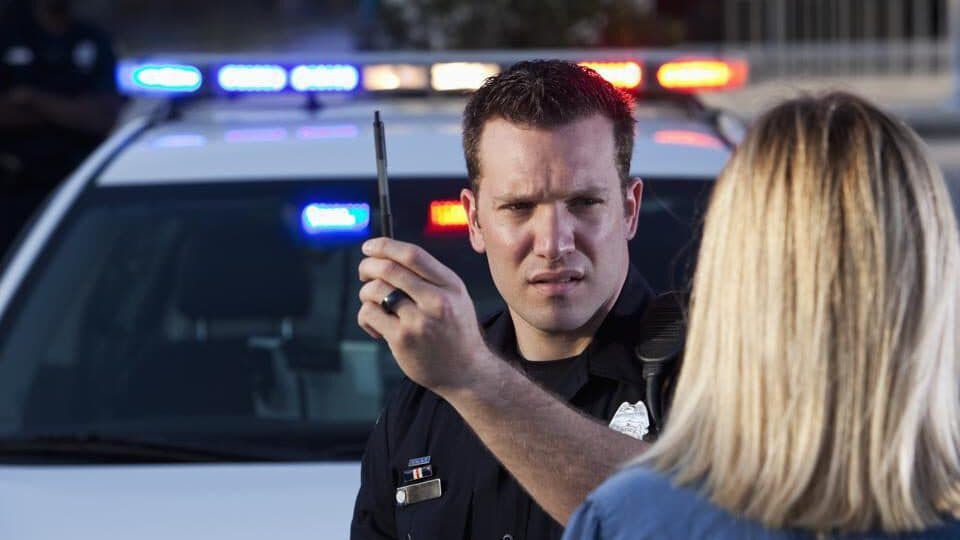
Vehicular Homicide And/or Serious Bodily Injury
Felony DUI cases make up a tiny fraction of statewide cases. But they happen, and without witness testimony that someone was drinking heavily and visibly impaired or intoxicated before taking the wheel may be impossible to prove under the Maryland Rochkind Standard for Blood Plasma/Serum to BAC conversion formulas performed by Dr. Haley Mulder, PhD, chief chemist of the Maryland State Police.
Maryland DUI Defense — Code-Level Breakdown
“Felony DUI” in Maryland: The Charge People Say, vs. The Charge the State Actually Files
Here’s the cleanest way to understand it: Maryland DUI/DWI lives in the Transportation Article (Transp. § 21-902). The “felony DUI” situation is usually not a super-charged § 21-902—it’s a separate Criminal Law case when impairment plus negligent driving results in death (vehicular homicide) or is alleged to result in a life-threatening injury.
Felony DUI Maryland
When someone searches “Felony DUI Maryland”, they’re usually trying to answer one question: “Does Maryland have a felony DUI charge?”
The statutory reality is more precise: the ordinary DUI/DWI offense is Transportation Article § 21-902—the traffic code DUI. :contentReference[oaicite:2]{index=2} Felony exposure typically comes from separate Criminal Law Article offenses—especially vehicular homicide statutes— triggered by the alleged outcome (death) plus negligent driving while impaired. :contentReference[oaicite:3]{index=3}
Quick translation (plain English)
- Traffic-code DUI = “I drove impaired / under the influence.” (Transp. § 21-902) :contentReference[oaicite:4]{index=4}
- Criminal-code “felony DUI” = “I caused a death while driving negligently and impaired.” (Crim. Law § 2-503 / § 2-504, etc.) :contentReference[oaicite:5]{index=5}
Felony DUI Maryland Under the Criminal Law Article
The public calls it “felony DUI.” The charging document calls it what the statute calls it. Here are the workhorse Criminal Law statutes that create felony exposure when alcohol/drug impairment is paired with negligent driving and death:
Crim. Law § 2-503 — Homicide by motor vehicle while under the influence
This statute criminalizes causing the death of another as a result of negligent driving while under the influence of alcohol (including “per se”). The statute specifies it is a felony and sets the penalty range. :contentReference[oaicite:6]{index=6}
Crim. Law § 2-504 — Homicide by motor vehicle while impaired by alcohol
Similar structure; different impairment threshold. This is also designated a felony with its own penalty range. :contentReference[oaicite:7]{index=7}
Crim. Law § 2-505 / § 2-506 — Drug/CDS impairment homicide
If the allegation is drug impairment (or a controlled dangerous substance), § 2-505 and § 2-506 are the parallel homicide statutes. Each is explicitly labeled a felony and includes subsequent-offender escalators. :contentReference[oaicite:8]{index=8}
Important: “Felony DUI” isn’t a magic third category of Transp. § 21-902. It’s the point where the State pivots from a traffic-code impairment prosecution into a Criminal Law homicide case.
Felony DUI Maryland vs. Serious Injury Cases
People often lump “serious injury” into “felony DUI.” Maryland’s codification is more nuanced: life-threatening injury offenses are in the Criminal Law Article (§ 3-211), but the statute text classifies them as misdemeanors—even though the penalties can still be crushing, especially as a subsequent offender. :contentReference[oaicite:9]{index=9}
Crim. Law § 3-211 — Life-threatening injury by motor vehicle while under the influence / impaired
§ 3-211 defines and penalizes “life-threatening injury” offenses tied to alcohol, drugs, or CDS impairment. It is a Criminal Law charge (not Transportation Article), and it includes misdemeanor penalty provisions and subsequent-offender enhancements. :contentReference[oaicite:10]{index=10}
What This Means for Your Defense
When a case crosses into “felony DUI” territory (vehicular homicide), the defense posture changes. Everything is higher-stakes: charging theory, causation, negligence proof, suppression issues, and expert gatekeeping. If it’s an alcohol case, the “impairment” question and the “negligence/causation” question are different battles— and the State has to win both.
Informational only; not legal advice. Charging decisions and outcomes depend on facts, evidence, and jurisdiction.