
Field Sobriety Tests in Maryland
If you were stopped for DUI in Maryland, there’s a good chance the officer put you through a series of roadside sobriety tests and then told you that you “failed.” That doesn’t mean the State has a strong case. It simply means the officer checked some boxes.
As a Maryland field sobriety test lawyer, I spend a lot of time going frame-by-frame through body camera video and comparing what the officer did to what the NHTSA manual actually requires. The difference between those two things is where your defense begins.
Call (240) 992-4733 to talk through what happened at your DUI stop.
NHTSA Standardized Field Sobriety Tests
In most Maryland DUI stops, officers rely on the three NHTSA standardized field sobriety tests:
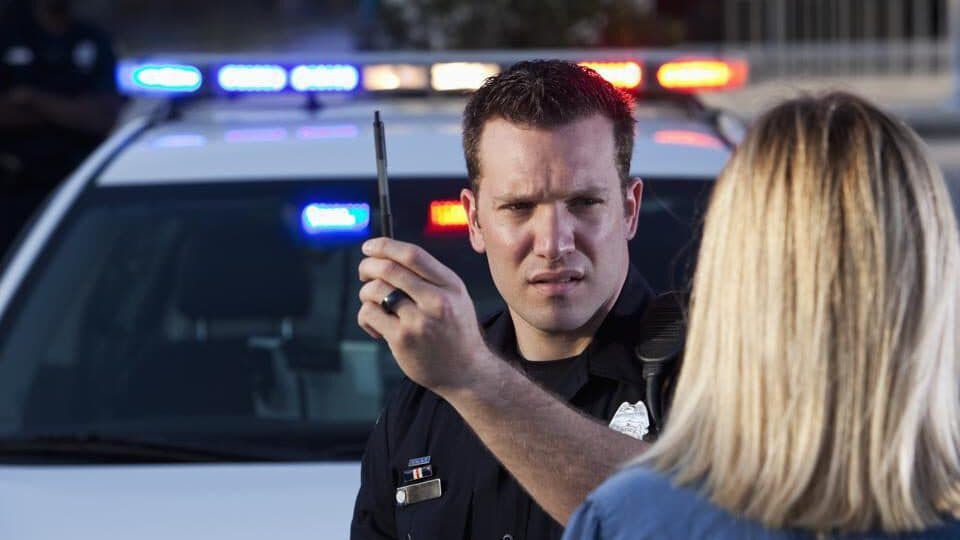
- Horizontal Gaze Nystagmus (HGN) – following a pen or light with your eyes
- Walk-and-Turn (WAT) – heel-to-toe walk on an imaginary line
- One-Leg Stand (OLS) – balancing on one leg while counting
On paper, these DUI field sobriety tests are supposed to be given and scored in a very specific way. In the real world, roadside sobriety tests in Maryland are often rushed, improvised, and done on uneven pavement with headlights and traffic whizzing by.
When I challenge field sobriety tests, I’m usually not arguing about whether you looked “perfect.” I’m showing that the officer didn’t follow the rules they’re trained to follow.
How Accurate Are Field Sobriety Tests, Really?
Police and prosecutors like to talk about the “science” behind NHTSA standardized field sobriety tests. What they rarely mention is how much those numbers depend on:
- Exact wording of instructions
- Proper demonstrations
- Level, dry, and well-lit surfaces
- Age, weight, footwear, and medical conditions
When any of those things are off, the reliability of the tests drops quickly. That’s why field sobriety test accuracy is one of the first things I look at when building a defense.
There is no magic trick for “how to beat field sobriety tests.” The real work happens afterward, when we break down what the officer did and compare it to what the training actually says.
Real-World Example: Drugged Driving, Confusion, and a Better Result
In one drugged driving DUI case in Montgomery County, a retired State Department employee and Army veteran was found unconscious near his vehicle after a serious crash. On body camera, while in and out of consciousness, he answered questions and mentioned medication. Later, toxicology showed only residual cocaine metabolites – not active cocaine.
The State tried to use his condition and the scene to paint a picture of impairment. Through careful work on the evidence – including the client’s medical state, the limits of the toxicology, and the way the investigation unfolded – we were able to push the case down to reckless driving, with the DUI dismissed and his security clearance preserved.
You can read a more detailed summary of that matter, along with other past case examples (with identifying details removed), at www.duidefensemd.com/past-case-examples. Past results do not guarantee future outcomes, but they do show how much can change when someone actually challenges the State’s assumptions.
How We Challenge Field Sobriety Tests in Maryland
Every case is different, but there are common themes in how I challenge field sobriety tests in Maryland courts:
- Video vs. report: Does the bodycam video match what the officer wrote, or do they exaggerate “stumbles,” “slurred speech,” and “bloodshot eyes” in the paperwork?
- Proper instructions: Did the officer give clear, step-by-step instructions consistent with the NHTSA manual?
- Medical and physical issues: Knee problems, back issues, vertigo, age, weight, and footwear all matter.
- Roadside conditions: Sloped shoulder, gravel, rain, heavy traffic, and flashing lights all affect performance on DUI field tests.
- Non-standard tests: Alphabet, finger-to-nose, and other “extra” tests are not NHTSA standardized field sobriety tests at all.
When you put all of that in front of a judge, the State’s neat story about “failing” the tests looks a lot less certain.
Local Experience with Field Sobriety Tests in Montgomery & Prince George’s Counties
I handle DUI cases arising from roadside sobriety tests in Maryland, including:
- Montgomery County: Rockville, Silver Spring, Bethesda, Gaithersburg, and surrounding areas.
- Prince George’s County: Hyattsville, Greenbelt, Upper Marlboro, College Park, and nearby communities.
If you’re looking for a Montgomery County DUI lawyer who actually reads the NHTSA manual and knows how these tests are supposed to work, that’s where a lot of my time goes.
Think You Failed the Field Sobriety Tests? Let’s Talk.
The officer may have told you the field tests “didn’t go well.” That doesn’t mean the case is over. It means we have work to do.
- Call (240) 992-4733
- Or use the online DUI case evaluation form
We’ll go through what happened at your DUI stop, step by step, and talk about where the State’s case can be challenged.
Challenging Field Sobriety Tests in Maryland
When police pull you over on suspicion of DUI, they often ask you to perform a series of physical exercises known as field sobriety tests (FSTs). Officers use these tests to establish “probable cause” to arrest you. However, these tests are highly subjective and prone to error.
As your Maryland field sobriety test lawyer, I know that “failing” these tests does not mean you are guilty. The National Highway Traffic Safety Administration (NHTSA) has standardized three specific tests, but even when administered correctly, they are not 100% accurate. When administered incorrectly—which happens frequently—their validity is significantly compromised.
Here is how we challenge field sobriety tests and the specific defenses we use for the three NHTSA standardized tests.
1. Horizontal Gaze Nystagmus (HGN)
The HGN test looks for an involuntary jerking of the eyeball as it tracks an object (usually a pen or light) moving side-to-side. Police claim this jerking indicates intoxication.
Common Defenses:
- Medical Causes: Nystagmus can be caused by over 40 distinct medical conditions, including inner ear infections, influenza, or simple eye strain.
- Improper Administration: If the officer moves the stimulus too fast, holds it too high, or does not hold it for the required duration, the test is invalid.
- Environmental Factors: Flashing cruiser lights or passing traffic can disrupt your vision and cause false positives.

2. The Walk-and-Turn Test
This test requires you to take nine heel-to-toe steps along a straight line, turn in a specific manner, and return with nine steps. It tests your ability to divide attention between physical and mental tasks.
Common Defenses:
- Physical Limitations: Back, leg, or knee injuries can make this test impossible even for a sober person.
- Surface Conditions: Roadside sobriety tests in Maryland often occur on gravel, sloped shoulders, or wet pavement, making balance difficult.
- Clothing: High heels, heavy work boots, or tight clothing can restrict movement and cause you to lose balance.
3. The One-Leg Stand Test
You are asked to raise one foot six inches off the ground and count aloud until told to stop (usually for 30 seconds). The officer looks for swaying, hopping, or using arms for balance.
Common Defenses:
- Weight and Age: Individuals who are 50 pounds or more overweight, or over the age of 65, may naturally have difficulty with this test regardless of sobriety.
- Nervousness: The intense anxiety of a DUI stop field test can cause shaking or swaying that mimics intoxication.
- Timing Errors: If the officer does not time the test accurately, or requires you to stand longer than 30 seconds, the results can be challenged.
Why You Need a Montgomery County DUI Lawyer
Many drivers ask how to beat field sobriety tests. The answer lies in the details. Police reports often exaggerate your “failure,” but body camera footage often tells a different story.
If the officer deviated even slightly from the NHTSA standardized field sobriety tests protocol, we can move to have that evidence suppressed. We scrutinize the environment, the officer’s instructions, and your medical history to prove that field sobriety test accuracy is unreliable in your case.