

21-902 charges in Maryland are not “just traffic tickets.” If you were charged under 21-902, you need a DUI Lawyer fast.
A charge under 21-902 means Maryland says you drove or attempted to drive while under the influence, while impaired, or impaired by alcohol, drugs, or a combination of both. In the real world, that means court, license risk, insurance pain, possible jail exposure, professional fallout, and a prosecutor trying to make the police version of events sound cleaner than it usually is. A good DUI Lawyer does not just “show up in court.” A good DUI Lawyer attacks the stop, the officer’s observations, the roadside tests, the timeline, the chemical testing issues, the paperwork, and the assumptions.
- 21-902 is the core Maryland impaired-driving statute.
- A DUI Lawyer can often find weaknesses in the stop, the tests, or the officer’s conclusions.
- Many people charged under 21-902 Maryland underestimate how serious the case really is.
- If you were charged under TA 21-902, early defense work matters.
Why 21-902 matters and why a DUI Lawyer should be involved early
The statute most people loosely call the Maryland DUI law is 21-902. If the citation or charging document says 21-902, the State is alleging a Maryland DUI charge, a Maryland DWI charge, a drug-impaired driving charge, or another form of impaired-driving offense under that statute. That means you are not dealing with some forgettable traffic inconvenience. You are dealing with a case that can affect your liberty, your license, your money, your insurance, your job, your security clearance, your reputation, and in some cases your professional future.
That is why hiring a DUI Lawyer early matters. The right DUI Lawyer does not wait for the trial date and then improvise. The right DUI Lawyer starts building the defense while evidence is still fresh. That includes reviewing the stop, reviewing any bodycam or dashcam, analyzing whether the officer had a legal basis to stop or prolong the detention, evaluating field sobriety allegations, comparing the written narrative to the video, examining the timing of any breath or blood testing, identifying medical explanations the police ignored, and looking for leverage points that a lazy defense would miss.
People charged under 21-902 Maryland often ask whether a first offense means they can just explain themselves and move on. That is usually wishful thinking. Prosecutors handle these cases every day. Judges hear every version of “I’m a good person,” “I had only a couple drinks,” and “I was fine to drive.” A real DUI Lawyer brings something more useful than a speech. A real DUI Lawyer brings strategy, preparation, technical attack points, and controlled damage prevention.
What 21-902 actually covers in Maryland
TA 21-902 is broader than many people realize. It does not only cover one narrow form of drunk driving. 21-902 includes driving under the influence of alcohol, driving while impaired by alcohol, driving while impaired by drugs or a combination of drugs and alcohol, and certain scenarios involving controlled dangerous substances or cannabis-related allegations. So when a person tells me they were charged under 21-902, I do not treat that as one generic bucket. I want to know which subsection, what theory the State is pushing, whether there was a test, whether the case is mostly observational, whether there was an accident, whether the client made admissions, and whether the officer overcharged in the hope of forcing a plea.
This matters because not every 21-902 Maryland case is equally strong. Some cases are heavily dependent on roadside observations that sound dramatic on paper but fall apart on video. Some cases involve people with fatigue, anxiety, injuries, language barriers, neurological issues, or medical conditions that mimic impairment. Some cases involve supposedly incriminating statements made during a stressful stop by somebody trying too hard to be cooperative. Some cases depend on chemical testing with timing and interpretation issues. And some cases are just weaker than they look because the officer’s narrative is cleaner than reality.
A strong DUI Lawyer treats 21-902 like a statute with moving parts, not a slogan. The defense starts by asking which part of the statute the State is really trying to prove and what evidence actually supports that theory. From there, the strategy becomes more precise: suppression, impeachment, expert attack, factual undercutting, plea leverage, mitigation, or trial posture. That is how a serious DUI Lawyer handles a Maryland DUI charge under TA 21-902.
Why 21-902 is not a payable ticket and why a DUI Lawyer helps keep you from making dumb mistakes
A charge under 21-902 is usually a must-appear charge. That means you are not dealing with the kind of ticket you can casually pay and forget. That alone should tell you something about how Maryland treats a 21-902 case. The court expects your appearance. The prosecutor expects to litigate or resolve the matter. The judge expects to see whether this case will be contested, mitigated, or set for a later proceeding. A person charged under 21-902 Maryland who delays, ignores the case, or assumes it will somehow disappear is making a dangerous bet.
A DUI Lawyer is valuable here not only because of courtroom advocacy, but because the first few decisions after the stop can shape the entire life of the case. Should the client immediately gather records? Yes. Should the client write down a detailed timeline while memory is fresh? Yes. Should the client stop talking about the case to friends, coworkers, and family who may later repeat those statements? Yes. Should the client preserve receipts, text logs, GPS history, Uber attempts, witness names, and any detail that contradicts the officer’s version? Also yes. These are not glamorous moves, but they are exactly the kind of moves a good DUI Lawyer tells people to make early in a Maryland DWI charge or Maryland DUI charge.
One of the stupidest outcomes in a 21-902 case is losing leverage because the defense started late. Police narratives harden. Witness memory fades. Video disappears. Opportunities shrink. A serious DUI Lawyer starts sooner because early pressure and early preparation often produce better results than last-minute scrambling.
How a DUI Lawyer attacks a 21-902 case
When people hear “DUI defense,” they often imagine one dramatic trial argument. In reality, a good DUI Lawyer attacks a 21-902 case from multiple directions at once. Was the stop lawful? Did the officer really have reasonable suspicion or probable cause? Was the driving as bad as claimed? Was there a legitimate basis to expand the stop into a DUI investigation? Did the officer give clear instructions? Did the client have medical, orthopedic, balance, speech, or anxiety issues affecting roadside tests? Does the video support the written report? Did the officer exaggerate clues? Were admissions voluntary and accurately quoted? Did testing occur when the statute and science actually help the State, or are there timing and interpretation problems?
That is how a real DUI Lawyer creates defense value in a 21-902 Maryland case. Sometimes the answer is suppression. Sometimes it is negotiation leverage. Sometimes it is narrowing the charge. Sometimes it is humanizing the client without conceding weakness. Sometimes it is getting the prosecutor to realize the officer will not look nearly as polished once the defense highlights inconsistencies. Sometimes it is preparing for trial because the best plea posture comes from being genuinely ready to fight.
A lazy defense treats a Maryland DUI Lawyer page like a sales pitch. A good DUI Lawyer knows clients hire lawyers because they want to know whether the case can actually be challenged. The honest answer in many 21-902 cases is yes. Not every case wins. Not every case gets dismissed. But many cases are much more attackable than frightened defendants assume on day one.
Common police allegations in a 21-902 case and why a DUI Lawyer does not just accept them
Most 21-902 charging narratives sound familiar. The officer says there was weaving, speed fluctuation, a traffic violation, or an accident. Then the officer says there was an odor of alcohol, glassy eyes, slurred speech, fumbling, confusion, unsteadiness, admission to drinking, refusal or poor performance on field sobriety testing, and some allegedly incriminating attitude or statement. That formula shows up in case after case. The problem for the State is that formula is not magic. It is only persuasive if it survives scrutiny.
A serious DUI Lawyer looks at each claim. Glassy eyes can mean fatigue, stress, allergies, irritation, or contact lens issues. “Slurred speech” is often subjective. Balance problems can come from shoes, roadside slope, injury, weight, nerves, age, or plain clumsy human movement. “Admission to drinking” is not admission to guilt under 21-902. Odor proves proximity to alcohol, not necessarily unlawful impairment. Fumbling for documents is common even during ordinary stops. And some officers narrate fear, confusion, or irritation as if it were proof of impairment because that is the script they are used to telling.
That is why a DUI Lawyer has to do more than say “my client is innocent.” The job is to dissect the assumptions embedded in a 21-902 Maryland police report and force the State to prove what it says it can prove. In many Maryland DUI charge cases, once the defense starts isolating each officer claim, the neat story starts looking messy.
21-902 roadside testing is not as clean as police make it sound
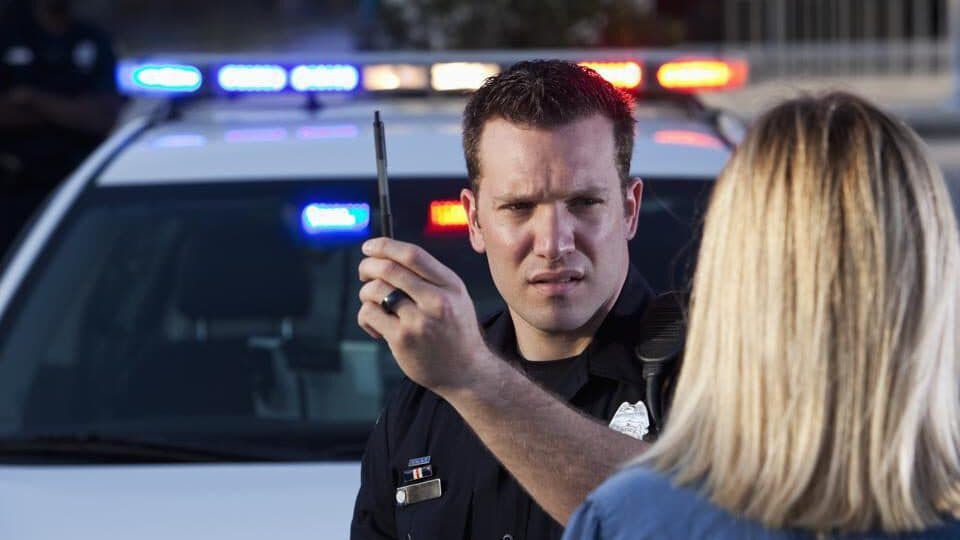
Roadside testing in a 21-902 case often gets treated as if it were some kind of scientific truth machine. It is not. A good DUI Lawyer understands that field sobriety exercises are dependent on conditions, instructions, officer training, interpretation, lighting, footwear, slope, weather, fatigue, injury, anxiety, body type, age, and how the officer chooses to characterize borderline performance. Even where the officer has training, that does not mean the officer applied the tests fairly or interpreted them honestly.
In many 21-902 Maryland cases, the video tells a more nuanced story than the report. The officer may write “could not maintain balance,” while the video shows a nervous person trying to follow rapid-fire directions on the shoulder of a road at night. The officer may write “failed the test,” while the actual performance looks mixed or ambiguous. That gap between report language and video reality is exactly where a DUI Lawyer earns value.
A DUI Lawyer handling a Maryland DWI charge or Maryland DUI charge under 21-902 should be prepared to show why these tests are not infallible and why “clues” are not the same as guilt. Jurors and judges do not have to accept the police interpretation just because it was written in an official report. They can be shown the flaws.
Breath tests, blood tests, and 21-902 cases: where a DUI Lawyer can find technical leverage
Some 21-902 cases are mostly observational. Others involve breath testing, blood testing, or hospital-based blood evidence. Those cases are not automatically stronger just because a number exists on paper. A DUI Lawyer should be analyzing timing, methodology, chain issues, how the result is being interpreted, and whether the prosecution is overselling what the number actually proves at the time of driving.
That matters because a 21-902 Maryland case is about what the State can prove, not what it confidently repeats. If the testing occurred later, the timeline matters. If there are inconsistencies between driving behavior, officer observations, and the testing narrative, those matter too. If a hospital draw is involved, there may be entirely different issues than with a traditional evidentiary breath test. A careful DUI Lawyer knows that not all test-related evidence is equally clean, equally admissible, or equally persuasive.
In other words, a number on a lab sheet or machine printout does not end a 21-902 defense. Sometimes it changes the strategy. Sometimes it narrows the battlefield. Sometimes it creates new attack angles. But it does not magically eliminate the need for a good DUI Lawyer.
What to do in the first 10 days after a 21-902 arrest if you want your DUI Lawyer to have something useful to work with
If you were charged under 21-902, the first 10 days matter. Not because the internet says “act fast” in every practice area, but because DUI evidence ages badly and opportunities disappear. If you want your DUI Lawyer to be able to build something strong, do the following:
- Write down everything that happened, from where you were before driving to when the stop ended.
- Preserve receipts, bar tabs, restaurant records, surveillance possibilities, text messages, and location history.
- Do not brag, vent, confess, or speculate about the case in texts or on social media.
- Identify passengers, witnesses, or anyone who saw your condition before or after the stop.
- Save every paper the officer or MVA-related paperwork gave you.
- Talk to a DUI Lawyer before you make strategic mistakes.
The reason this matters in a 21-902 Maryland case is simple: prosecutors are trying to build a clean narrative, and your defense often depends on facts they either do not have or do not want to emphasize. The earlier your DUI Lawyer learns those facts, the more leverage the defense may have.
Why 21-902 charges scare professionals, parents, government workers, and business owners
A 21-902 charge hits people differently depending on what is at stake in their lives. For some, the main fear is jail. For others, it is license loss. For others, it is the effect on a CDL path, professional licensing, a pending clearance issue, immigration anxiety, family court optics, employment reputation, or an employer background check. That is why the right DUI Lawyer does not treat every client like a carbon-copy “first offender.”
In a 21-902 Maryland case, the legal exposure is only part of the story. The practical exposure matters too. A nurse, teacher, engineer, contractor, government employee, physician, executive, consultant, rideshare driver, or business owner may all face different collateral problems from the same underlying charge. A strong DUI Lawyer thinks about more than the courtroom. The strategy should reflect the client’s actual life.
That is also why the “I’ll just plead guilty and move on” mindset can be so dangerous in a Maryland DUI charge. Moving on is not always what actually happens. Insurance can spike. Background questions can follow. Professional reporting issues may arise. Travel, reputation, and internal workplace consequences can become part of the damage. A smart DUI Lawyer is trying to reduce the total damage, not just survive one court date.
First offense 21-902 cases still deserve a real DUI Lawyer
A lot of people charged under 21-902 are first offenders. That does not make the case harmless. A first offense is still a Maryland DUI charge or Maryland DWI charge with real consequences. It still creates risk. It still creates record anxiety. It still creates leverage for the State unless the defense pushes back intelligently.
Some first-offense clients assume the court will be lenient just because they have no prior history. Sometimes that helps. Sometimes it does not help nearly as much as people expect. Judges do not sentence in a vacuum. Prosecutors do not simply fold because a person is otherwise decent. A first-offense 21-902 Maryland case is often the exact kind of case where a prepared DUI Lawyer can make a meaningful difference by preventing overcharging, challenging the evidence, controlling the narrative, and negotiating from a position of strength instead of apology.
The point is not that every first-offense 21-902 case goes to trial. The point is that every first-offense case deserves to be analyzed like it could matter a lot — because to the person charged, it usually does.
What a serious DUI Lawyer is thinking about before court in a 21-902 case
Before the first meaningful court date in a 21-902 case, a good DUI Lawyer should already be thinking several moves ahead. Is there a suppression angle? Is there impeachment material? Is there an officer credibility problem? Is this a case where the client should complete proactive mitigation early, or would that send the wrong signal? Is there bodycam that helps? Does discovery support a technical challenge? Is the client someone whose professional life requires especially careful handling? Is the prosecutor likely to negotiate, or is this the kind of case where a stronger trial posture creates the best leverage?
That is what distinguishes a real DUI Lawyer from somebody who just makes a court appearance. A real DUI Lawyer is not only reacting. A real DUI Lawyer is shaping the battlefield. That approach matters a lot in a 21-902 Maryland case because the State often expects defendants either to panic or to roll over. Smart preparation changes that dynamic.
If your case involves alcohol only, drugs, prescription medication, a refusal allegation, roadside tests, an accident, or test evidence, the details matter. 21-902 is one statute, but the path to a good result is highly case-specific. That is why experienced strategy matters.
Why this page exists: people searching 21-902 usually need a DUI Lawyer, not a lecture
People who search for 21-902 are usually not doing academic research. They are trying to figure out what the charge means, how bad it is, whether they must appear, whether they can beat it, and whether they need a DUI Lawyer. The blunt answer is yes: if you were charged under 21-902, you should talk to a DUI Lawyer. Not because every case is hopeless, but because too many people damage their own cases by underestimating what they are up against.
A useful Maryland DUI Lawyer page should actually answer what frightened people need answered. 21-902 is serious. A DUI Lawyer can challenge more than you think. First-offense cases still matter. Officer narratives are often vulnerable. Roadside tests are not magic. Chemical evidence is not always the end of the story. Early action matters. And if your job, license, family, or future matters, this is not the kind of case to treat casually.
That is the real purpose of this page. Not fluff. Not generic “call us today” wallpaper. Real guidance, with a clear point: if you were charged under TA 21-902, get a DUI Lawyer involved before the State’s version of events becomes the only version anyone sees.
21-902 Maryland DUI Lawyer FAQ
21-902 is Maryland’s main impaired-driving statute. It covers DUI, DWI, impairment by alcohol, impairment by drugs, and certain combination-impaired driving allegations. If you were charged under 21-902, talk to a DUI Lawyer quickly.
Yes. A DUI Lawyer can analyze whether the stop, detention, tests, officer observations, and evidence actually support the 21-902 Maryland charge. Even a first offense can carry serious consequences.
Usually yes. A charge under 21-902 is generally not the kind of citation you just pay online and forget. A DUI Lawyer can explain what to expect in court and how to protect the case early.
Some 21-902 cases can be beaten, reduced, or resolved more favorably than the client first expected. Outcomes depend on the facts, the video, the stop, the officer, any testing, and the defense strategy. A prepared DUI Lawyer can often identify attack points that are not obvious at first glance.
Save paperwork, write down the timeline, preserve receipts and witnesses, stop talking about the case, and contact a DUI Lawyer. Early action in a 21-902 Maryland case can preserve defenses and reduce preventable mistakes.
Yes. A first-offense 21-902 case can still carry heavy consequences. A DUI Lawyer should evaluate it seriously from the start rather than treating it like a minor traffic case.
Charged under 21-902? Get a DUI Lawyer involved now — not after the State gets comfortable.
If you are looking up 21-902, odds are you are already under pressure. Good. Use that pressure the right way. Move early. Preserve evidence. Stop making admissions. Get a DUI Lawyer who understands how to attack a 21-902 Maryland case instead of just processing it.