

Maryland DUI Lawyer Fighting the Stop, the Tests, the Breath Machine, and the State’s Story
A Maryland DUI arrest is not just a traffic problem. It can trigger a criminal case, an MVA license case, possible ignition interlock consequences, immigration concerns, employment issues, CDL consequences, insurance problems, and a permanent public record if it is handled carelessly.
Christopher G. Moschkin, Esq. defends DUI and DWI cases across Maryland by attacking the evidence at every stage: the stop, detention, field sobriety tests, officer observations, breath testing, blood testing, drug recognition opinions, body camera footage, and MVA paperwork.
DUI/DWI Defense Maryland
2024 & 2026
2020 • 2021 • 2022 • 2026


TL;DR: Maryland DUI Lawyer Defense Strategy
- A Maryland DUI case usually has two tracks: the criminal court case and the separate MVA license case.
- The State must prove more than “odor of alcohol,” “red eyes,” or “poor balance.” Innocent explanations matter.
- Field sobriety tests are not magic. They depend on instructions, lighting, surface conditions, footwear, medical issues, fatigue, officer training, and video evidence.
- Breath and blood testing can be challenged through procedure, calibration, certification, observation-period problems, contamination issues, hospital testing differences, and expert reliability.
- Christopher Moschkin focuses on technical DUI defense, trial preparation, suppression issues, and scientific challenges rather than treating a DUI case like a routine plea.
Maryland DUI Lawyer for Criminal Court and MVA License Defense
When someone searches for a Maryland DUI lawyer, they usually need help immediately. A DUI arrest can create confusion because the officer gives citations, temporary license paperwork, advice of rights forms, court dates, and MVA consequences all at once. The criminal court case and the driver’s license case are related, but they are not the same case.
Maryland Transportation Article § 21-902 includes the major alcohol and drug-impaired driving offenses, including driving under the influence of alcohol, driving under the influence per se, driving while impaired by alcohol, and drug-related impaired driving offenses. A Maryland DUI lawyer must understand the legal difference between those charges because the proof, penalties, negotiation posture, and trial strategy may differ depending on the specific citation.
On the license side, the Maryland MVA imposes administrative consequences for test failures and refusals. The MVA lists administrative suspension periods for breath test results and refusals, including 180 days for many first test failures and 270 days for a first refusal. The interlock decision can be separate from what happens in criminal court. That is why a complete Maryland DUI defense strategy must account for both the courthouse and the MVA.
Why Choose Christopher Moschkin as Your Maryland DUI Lawyer?
Christopher G. Moschkin, Esq. approaches DUI defense as litigation, not paperwork. The goal is not to simply process a client through court. The goal is to examine whether the stop was lawful, whether detention was justified, whether field sobriety testing was valid, whether the chemical test was admissible, whether the officer’s conclusions match the video, and whether the State can prove impairment beyond a reasonable doubt.
Technical DUI Defense
DUI cases often turn on details: observation periods, testing sequence, officer instructions, body camera angles, HGN administration, medical conditions, fatigue, lighting, road surface, weather, footwear, and whether the officer documented alternative explanations.
Trial-Focused Preparation
Every DUI case should be prepared as if the State may need to prove the case at trial. That posture can change negotiations, suppression strategy, cross-examination, and the ultimate result.
MVA Hearing Strategy
The administrative license case may involve the DR-15 form, whether the request was timely, whether the test was properly offered, whether the refusal was valid, and whether interlock or a hearing is the best option.
Forensic Challenges
Breath and blood cases can involve machine certification, simulator solution records, blood-serum conversion issues, hospital blood testing, chain of custody, and expert admissibility under Maryland’s reliability standards.
Maryland DUI Lawyer Defense: The State’s Evidence Is Often Less Certain Than It Sounds
DUI reports often use the same stock phrases: “odor of alcoholic beverage,” “bloodshot watery eyes,” “slurred speech,” “swaying,” “poor balance,” “failed standardized field sobriety tests,” and “admitted drinking.” Those phrases can sound persuasive until they are tested against video, cross-examination, medical reality, and ordinary human experience.
Bloodshot watery eyes can come from fatigue, allergies, crying, contact lenses, smoke, dust, dry air, screen strain, long work hours, lack of sleep, or simply being awake late at night. Poor balance can come from nerves, uneven pavement, footwear, age, injury, medical conditions, weight distribution, or confusing instructions. Slurred speech can be caused by accents, dental issues, fatigue, anxiety, or audio quality. A strong Maryland DUI lawyer does not let the State convert ordinary human symptoms into automatic proof of impairment.
Maryland DUI Lawyer for Field Sobriety Test Challenges
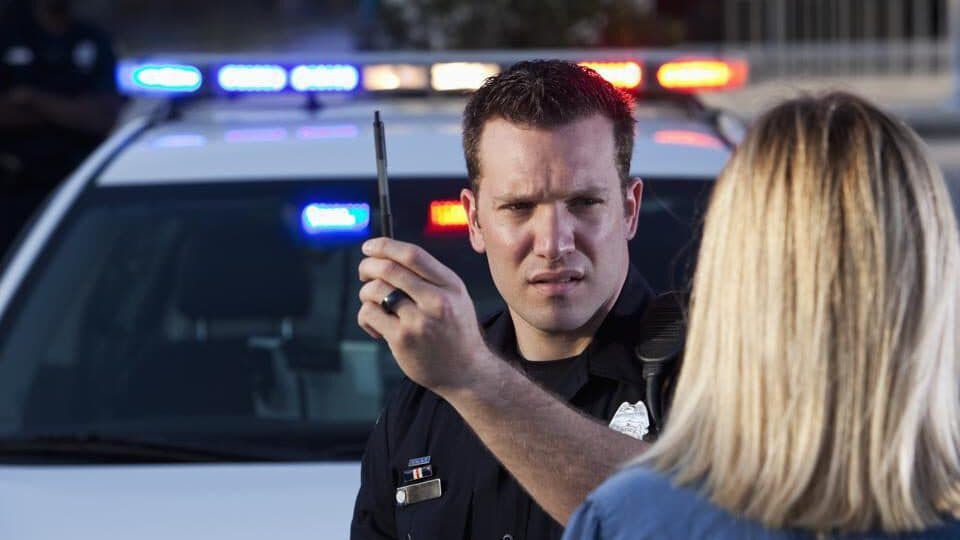
Standardized field sobriety tests are frequently presented as scientific, but they depend heavily on proper administration. If the officer gives incomplete instructions, demonstrates the test incorrectly, chooses an uneven surface, fails to account for footwear or medical conditions, positions the camera poorly, rushes the driver, or exaggerates clues, the defense has room to challenge the conclusion.
Horizontal Gaze Nystagmus
HGN evidence can be powerful if administered correctly, but it is also vulnerable to technical mistakes. The defense may examine whether the officer checked for equal tracking and pupil size, used the correct stimulus distance, moved the stimulus at the correct speed, held maximum deviation long enough, estimated the 45-degree angle properly, and ruled out non-alcohol causes of nystagmus.
Walk-and-Turn
The walk-and-turn test can be affected by footwear, body type, age, injury, road slope, gravel, weather, traffic, lighting, nervousness, and whether the officer provided a complete demonstration. A person can miss technical “clues” without being unsafe to drive.
One-Leg Stand
The one-leg stand is not performed in a doctor’s office. It is often performed roadside, at night, under police pressure, sometimes on an uneven shoulder, with vehicles passing nearby. Those conditions matter.
Maryland DUI Lawyer for Breath Test and Blood Test Challenges
Breath and blood evidence may look objective, but it is still generated through a process. A Maryland DUI lawyer should review whether the test was lawfully requested, whether the DR-15 advice was properly communicated, whether the breath machine was certified, whether the officer followed the observation period, whether mouth alcohol contamination was possible, whether the test sequence complied with regulations, and whether all required records were produced.
Blood cases create additional issues. Hospital blood tests may measure serum or plasma rather than whole blood. The State may try to convert or interpret those numbers. That can open the door to challenges involving methodology, conversion assumptions, expert reliability, lab records, chain of custody, medical treatment context, and whether the number actually proves impairment at the time of driving.
The Two-Track Problem: Criminal DUI Court vs. Maryland MVA Hearing
A Maryland DUI arrest can trigger a criminal prosecution and an administrative MVA license process. The criminal case asks whether the State can prove DUI or DWI in court. The MVA process focuses on licensing consequences from a chemical test failure, a high test result, or a refusal. Winning one track does not automatically solve the other.
Step 1: Review the Stop
Was there a lawful basis for the traffic stop? Was it speeding, lane movement, equipment, crash investigation, welfare check, checkpoint, or something else? If the stop fails, key evidence may be attacked.
Step 2: Challenge the Detention
Even if the initial stop was lawful, the officer still needs justification to expand the encounter into a DUI investigation. Odor alone, vague nervousness, or a late-night stop may not tell the whole story.
Step 3: Examine the Field Sobriety Tests
The defense reviews instructions, demonstrations, surface conditions, video, officer training, test clues, and whether innocent explanations were ignored.
Step 4: Attack Chemical Testing
Breath and blood tests require proper procedure. Machine records, calibration, certifications, lab records, observation periods, chain of custody, and expert assumptions matter.
Step 5: Defend the MVA License Case
The MVA issue may involve hearing deadlines, interlock election, refusal allegations, test result levels, temporary license status, and whether the officer completed the paperwork correctly.
Maryland DUI Lawyer for First Offense DUI Cases
A first DUI arrest can be terrifying because most clients have never been in criminal court before. A first offense does not mean the case should be handled casually. A bad result can create license consequences, probation, alcohol education requirements, ignition interlock issues, insurance consequences, employment questions, and future enhancement problems.
A strong first-offense DUI defense examines whether the State can actually prove impairment, whether suppression issues exist, whether the client qualifies for mitigation, whether PBJ is realistic, whether a trial is strategically superior, and whether the MVA track can be managed without unnecessary driving disruption.
Maryland DUI Lawyer for Second Offense and Repeat DUI Cases
Repeat DUI cases require an even more aggressive review. Prior offenses can affect negotiation posture, sentencing exposure, interlock requirements, probation conditions, and judicial perception. The defense must examine whether the prior really qualifies, whether the State can prove the current case, and whether the alleged impairment evidence is weaker than it appears.
In repeat-offense cases, the client’s mitigation plan should start early. Alcohol evaluation, treatment compliance, driving history review, employment documentation, family responsibilities, medical issues, and proof of proactive steps can matter in both negotiation and sentencing.
Maryland DUI Lawyer for Drug DUI and DRE Cases
Drug DUI cases are different from alcohol per se cases because there is often no simple number that proves impairment. The State may rely on officer observations, a Drug Recognition Expert evaluation, toxicology, alleged admissions, driving behavior, and circumstantial evidence. That creates defense opportunities.
A DRE opinion is still an opinion. The defense can review training, protocol compliance, medical alternative explanations, prescription history, toxicology limitations, timing, lack of quantitative impairment correlation, and whether the expert’s methodology is reliable enough for the opinion being offered.
Maryland DUI Lawyer for “Sleeping in the Car” and Actual Physical Control Cases
Not every DUI case involves an officer seeing someone drive. Some Maryland DUI cases involve a person found asleep or parked in a vehicle. Those cases may turn on whether the State can prove driving, attempted driving, or actual physical control. Relevant facts may include where the person was seated, whether the engine was running, where the keys were located, whether the vehicle was operable, whether the person had a safe harbor explanation, and whether the State can prove when alcohol was consumed.
These cases often require careful factual reconstruction. If the vehicle was disabled, parked, or not capable of being driven safely, the defense may have powerful arguments that the State cannot prove the required driving element beyond a reasonable doubt.
Maryland DUI Lawyer for MVA Hearings and Ignition Interlock
The Maryland MVA license process moves quickly. A driver may need to decide whether to request a hearing, elect ignition interlock, challenge a refusal, challenge the test paperwork, or manage temporary license issues. The right decision depends on the facts, the test result, the person’s driving needs, whether the person has a CDL, and whether there are defects in the State’s paperwork.
Interlock may be mandatory or strategically useful in some circumstances, but it is not the same as winning the criminal case. A Maryland DUI lawyer should explain the difference between protecting the license, defending the criminal charge, preserving employment, and avoiding unnecessary admissions.
Counties Served by This Maryland DUI Lawyer
Christopher Moschkin represents DUI clients across Maryland, including Montgomery County, Prince George’s County, Frederick County, Howard County, Anne Arundel County, Baltimore City, Baltimore County, Charles County, Calvert County, St. Mary’s County, and other jurisdictions depending on the case. Each courthouse has local procedures, local prosecutors, local judges, and local enforcement patterns.
Maryland DUI defense is statewide law applied locally. A traffic stop on I-270 in Montgomery County, a crash investigation in Prince George’s County, a State Police stop on I-495, a beach-route stop, or a checkpoint case may all involve the same statutes but very different facts.
What to Do After a Maryland DUI Arrest
The first priority is preserving deadlines and evidence. Do not wait until the court date to begin working on the case. Body camera footage, dash camera footage, dispatch audio, calibration records, medical records, witness information, tow records, accident records, and MVA paperwork should be reviewed early.
A client should also begin mitigation early when appropriate. That may include alcohol education, assessment, treatment, community service, documentation of employment, proof of family responsibilities, proof of license need, and any medical documentation explaining symptoms that were mistaken for impairment.
Talk to a Maryland DUI Lawyer Now
If you were arrested for DUI or DWI in Maryland, the defense should begin before the State’s version of events becomes the only version anyone sees. Christopher G. Moschkin, Esq. can review the citations, MVA paperwork, police report, body camera, field sobriety testing, chemical testing, and court strategy.
Call 301-304-6448 or text 240-992-4733 to discuss a Maryland DUI case.
Maryland DUI Lawyer FAQ
What is the difference between DUI and DWI in Maryland?
DUI generally refers to the more serious alcohol-impaired driving charge, including driving under the influence or under the influence per se. DWI generally refers to driving while impaired by alcohol. The difference can affect penalties, negotiation strategy, and trial issues.
Can a Maryland DUI lawyer challenge bloodshot watery eyes testimony?
Yes. Bloodshot watery eyes may have innocent explanations, including fatigue, allergies, crying, contact lenses, smoke, dust, dry air, long work hours, or lack of sleep. A defense lawyer can cross-examine the officer on whether those alternatives were considered.
Can I win a DUI case if I failed field sobriety tests?
Yes, depending on the facts. Field sobriety tests can be challenged based on instructions, demonstrations, medical limitations, surface conditions, footwear, weather, lighting, nerves, officer training, and whether the video supports the officer’s claims.
Do I need a separate MVA hearing after a Maryland DUI arrest?
Many DUI arrests create a separate MVA license issue, especially after a breath test failure, high result, or refusal. The correct choice depends on the paperwork, deadlines, driving needs, and whether interlock or a hearing is strategically better.
Can a breath test be challenged in Maryland?
Yes. Breath tests can be challenged through machine certification, calibration records, simulator solution records, observation period issues, mouth alcohol contamination, operator procedure, timing, and whether all required documents were produced.
Can a blood test be challenged in a Maryland DUI case?
Yes. Blood cases may involve hospital testing issues, serum or plasma versus whole blood questions, chain of custody, lab methodology, expert assumptions, conversion reliability, timing, and whether the number proves impairment at the time of driving.
Can I get probation before judgment for a Maryland DUI?
PBJ may be possible in some Maryland DUI cases, especially first-offense cases, but it depends on the facts, record, judge, mitigation, test result, accident allegations, and negotiation posture. PBJ is not the same as a not guilty verdict or dismissal.
Should I hire a Maryland DUI lawyer before my first court date?
Yes. Important evidence and MVA deadlines can arise before the first court date. Early review helps preserve arguments, request evidence, evaluate license options, and prepare mitigation or trial strategy.