
Maryland DUI Field Sobriety Tests: The Ultimate Defense Guide
This page explains how Maryland DUI field sobriety tests are supposed to be administered under NHTSA materials, how they’re often done in real roadside conditions, and how a defense lawyer can challenge (and sometimes exclude) SFST evidence.
Maryland DUI Field Sobriety Tests Are Evidence — Not Automatic Guilt
In a Maryland DUI/DWI case, field sobriety testing is one piece of evidence. Video, instructions, medical conditions, footwear, language barriers, and the officer’s deviations from standardized procedures can all change the meaning of what “happened.”
The State often tries to turn Maryland DUI field sobriety tests into a scientific certainty. The defense job is to make the court and jury see what they really are: roadside divided-attention tasks, scored by a human being, under messy conditions.
NHTSA & Standard Field Sobriety Tests in Maryland
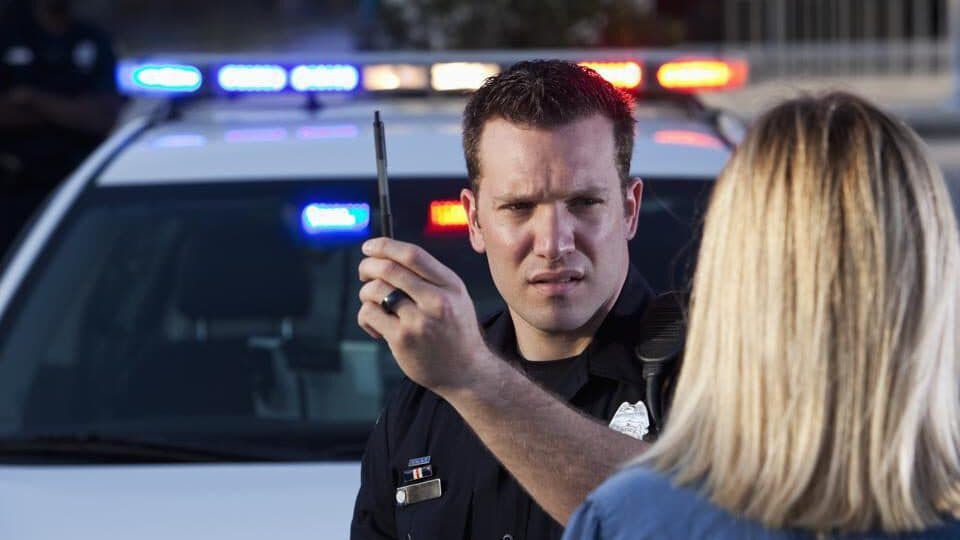
NHTSA’s SFST training is built around three “standardized” tests: Horizontal Gaze Nystagmus (HGN), Walk-and-Turn (WAT), and One-Leg Stand (OLS).
The key defense theme is simple: standardized only means something if the officer actually standardized it. When the administration is rushed, incomplete, poorly instructed, or performed under bad conditions, reliability drops fast.
Why “accuracy numbers” don’t decide your case ▶
Prosecutors love quoting general accuracy statistics. But those numbers assume controlled conditions and standardized administration. Your case is about your video, your conditions, your instructions, and your medical/physical factors.
HGN in Maryland DUI Field Sobriety Tests: The “Eye Test” and Foundation Problems
HGN is the test officers treat most like “science.” It’s also the one most vulnerable to foundation attacks: training, timing, distance, lighting, and alternative medical causes.
High-value defense attacks on HGN ▶
- Distance/angle errors: body-cam often shows the stimulus is too far or moving erratically.
- Timing mistakes: rushing the passes undermines the standardized method.
- Alternative causes: fatigue, medications, inner-ear issues, eye conditions, head injury, etc.
- “Expert” creep: officers sliding from “observed nystagmus” to “impaired / above the limit.”
Walk-and-Turn in Maryland DUI Field Sobriety Tests: The Instruction Trap
Walk-and-Turn is instruction-heavy. Missing one instruction can generate multiple “clues” that look like impairment on paper.
What breaks WAT reliability in real Maryland stops ▶
- No real line: “imaginary line” testing on rough pavement is not what validation assumes.
- Uneven shoulder / road crown: balance errors become predictable.
- Footwear: boots, dress shoes, slick soles, or heels create “clues.”
- Language barrier / stress: comprehension issues get scored as impairment.
One-Leg Stand in Maryland DUI Field Sobriety Tests: Balance ≠ Intoxication
OLS is extremely sensitive to injury, age, anxiety, footwear, and surface conditions. A “clue” can just be physics.
Defense angles that jurors understand instantly ▶
- Medical/injury screening: officers often skip it.
- Surface + wind + cold: shaking and swaying look like impairment on paper.
- Counting differences: nervous drivers speed up or slow down and get “hopped” into a fail.
Non-Standard “Field Sobriety” Tests in Maryland
Alphabet, counting backwards, finger-to-nose, time estimation, “touch your nose,” etc. These are not the validated SFST battery. The defense goal is to strip away the scientific aura and reframe them as subjective roadside exercises.
Conditions That Skew Maryland DUI Field Sobriety Tests
Lighting, traffic, wind, rain, cold, uneven pavement, gravel, slopes, and flashing emergency lights can all create “clues.” Police reports often describe “flat/dry/well-lit” conditions — video often tells the truth.
Quick checklist (what we look for on video) ▶
- Road crown, slope, potholes, gravel, standing water
- Boots/heels/dress shoes/flip-flops
- Officer interruptions, rushed instructions, talking over the subject
- Headlights, strobes, traffic noise, wind, rain
Motion to Exclude “Expert” Testimony on SFSTs (Embedded PDF)
Below is an embedded PDF of a motion to exclude or limit purported expert testimony related to SFST administration/scoring and “failure” conclusions. Replace the PDF URL with your uploaded file path.
Case Law Themes That Limit Maryland DUI Field Sobriety Tests
The cleanest way to win SFST issues is combining: video + foundation + limits on opinions. The core themes are:
- SFSTs are observational tools; the officer’s interpretation is not automatically “science.”
- HGN-related opinions often require stronger foundation and careful limits.
- Motions in limine can stop the State from inflating SFSTs into a BAC estimate or “conclusive failure.”
Talk to a Maryland DUI Lawyer About Maryland DUI Field Sobriety Tests
Want a fast reality check based on your stop video and the report? Call or text to request a FREE consultation.