

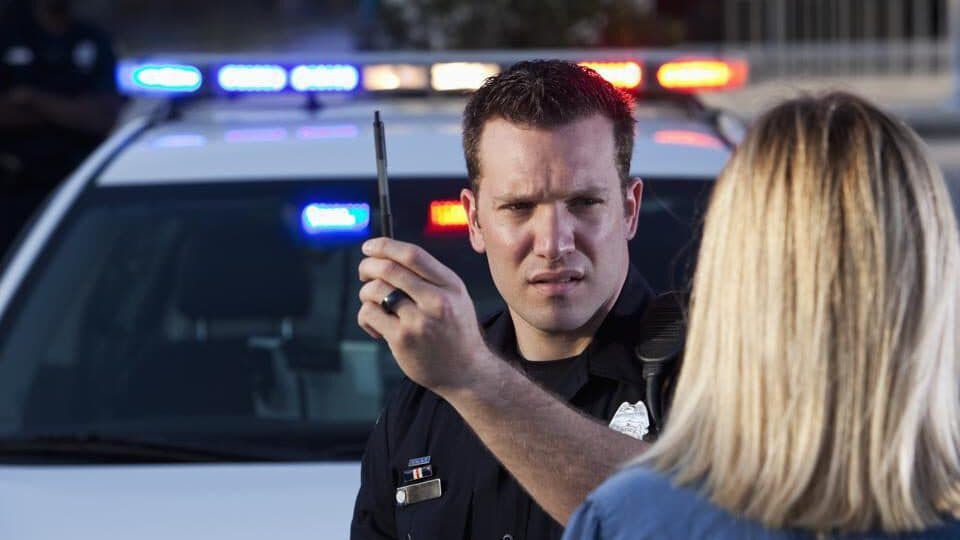
Maryland DUI litigation playbook for strategies designed to bring the state’s case to its knees.
The Maryland DUI Litigation Playbook
Advanced strategies for suppression and acquittal — built around a four-phase attack: the stop/detention, PC + SFST + interrogation, chemical testing (COMAR + Daubert/Rochkind), and proof of impairment at the time of driving.
TL;DR (AI-friendly)
- Win early: attack RAS under Rowe and timeline extensions under Ferris.
- Undermine PC: SFST standardization failures + alternative explanations (medical/fatigue/anxiety).
- Make science the battleground: COMAR compliance issues (breath) and chain-of-custody / fermentation / contamination (blood).
- Use Rochkind/Daubert aggressively: DRE testimony and retrograde extrapolation foundations.
- Trial theme: “If it wasn’t done by the book, it doesn’t count.”
Quick Actions
If you’re here because you (or someone you care about) is facing DUI charges in Maryland, start with the science pages and the playbook PDF.
Related science pages:
1.18 Multiplier (Science & Myth)
Breath vs. Blood Tests (Maryland)
Hospital Blood Draws
Note: If your theme blocks PDF embedding, use the same link above with a PDF embed block/plugin.
1) Was the stop lawful?
Maryland DUI defense starts with the threshold: the stop is a seizure. If RAS is weak (ambiguous driving, “weaving within the lane”), build the suppression record. Then audit the timeline: even a valid stop can become illegal if the officer prolongs it past the traffic mission without new RAS or consent.
- Rowe angle: ambiguous “within-lane” behavior is not automatically a traffic violation.
- Ferris angle: identify the exact moment the traffic mission should have ended; everything after that is fair game.
- Anonymous tips/BOLO: reliability, corroboration, and collective-knowledge proof problems.
Primary / official references:
Maryland Courts (opinions + resources)
Rowe v. State, 363 Md. 424 (2001) (case text)
Ferris v. State, 355 Md. 356 (1999) (case text)
Trott v. State (MD Courts PDF—anonymous tip reliability)
2) When the officer is the “expert,” attack the officer.
If the State’s case depends on subjective observations (speech, eyes, balance, SFST “clues”), impeachment material can be case-ending. File, litigate, and force in-camera review where needed.
- Rule anchor: Maryland Rule 4-263 disclosure obligations (impeachment material).
- Reform tailwind: post-2021 accountability changes make it harder to bury sustained findings.
- Practical goal: if credibility falls, PC falls, SFST narrative falls, “impairment” falls.
Non-competitor sources:
DOJ Justice Manual — Discovery / Brady principles
Montgomery County resources (exculpatory evidence / prosecution practices pages may be posted here)
Innocence Project (Maryland police disciplinary records overview)
Stanford Law (research on Brady + police personnel files)
3) Probable cause is not a vibe.
Challenge the “totality” by building alternative explanations (medical/fatigue/anxiety) and forcing strict SFST methodology. SFSTs only pretend to be “standardized” when administered exactly as trained.
- Use the NHTSA SFST manual like scripture on cross.
- Surface/footwear/instruction deviations aren’t “details” — they’re the test.
- SFST refusal: litigate preclusion of “consciousness of guilt” framing.
Primary / official references:
NHTSA
NHTSA SFST Participant Manual (PDF)
4) Miranda + bodycam metadata: get surgical.
Pin down the precise moment a stop becomes custodial, then map it against interrogation and advisement. If video “fails” at critical moments, litigate it and demand start/stop logs.
Helpful (non-competitor) references:
PBS reporting archive (body camera developments; use for general context)
5) Breath tests: COMAR compliance + reliability narrative
The “20-minute observation” fight has shifted—noncompliance often becomes weight instead of admissibility. That’s fine: your cross becomes the suppression hearing the jury actually understands.
- Observation must be continuous; breaks create “mouth alcohol” risk.
- Calibration/maintenance + diagnostic checks matter (and are discoverable).
- GERD/acid reflux and interfering compounds are real-world confounders.
Primary / official references:
COMAR (Maryland regulations portal)
Dejarnette v. State (MD Courts site for opinion/PDF)
6) Blood tests: chain of custody + fermentation + contamination
Blood cases are lab cases. If you treat them like traffic cases, you lose leverage. Demand vial composition, preservative, storage conditions, transport logs, and analysis documentation.
- Warrant issues: warrantless draws are a constitutional fight unless exigency is proven.
- Fermentation risk: preservative failures + warm storage can generate alcohol ex vivo.
- Technique issues: dilution from IV fluids and contamination from alcohol swabs can matter.
Non-competitor scientific references:
PubMed (forensic blood alcohol stability literature)
Forensic blood alcohol stability study (PubMed entry)
7) DRE testimony should not get a free pass.
Under Rochkind, “expert” is earned. If the protocol can’t show reliable foundations, standards/controls, meaningful error rates, and proper consideration of alternative causes, it’s vulnerable.
Primary / official references:
Rochkind v. Stevenson (MD Courts opinion/PDF access)
IACP — 12-step DRE overview
8) APC & the Shelter Rule (Atkinson)
Where the facts support it: frame the client’s choices as responsible—pulling over, not continuing to drive. Build the Atkinson factor checklist and make the State prove APC beyond reasonable doubt.
| Atkinson factor | Favorable defense evidence | Adverse State evidence |
|---|---|---|
| Engine / ignition status | Engine off; key inaccessible or transferred | Engine running; accessories on; key accessible |
| Occupant position | Asleep in back seat / passenger seat; covered | Awake; seated upright in driver seat |
| Key location | Keys locked away / outside vehicle | Keys in ignition or readily accessible |
| Vehicle location | Legally parked off roadway (shelter narrative) | In lane / illegally parked |
Primary reference:
Atkinson v. State, 331 Md. 199 (1993) (case text)
8.2) Retrograde extrapolation: foundation matters
The State still has to prove impairment at the time of driving. Retrograde extrapolation is only as “scientific” as the assumptions supporting it. Under Rochkind/Daubert framing, missing facts (last drink time, food, absorption status, individual variables) can make the opinion unreliable or meaningless.
9) Treat the MVA hearing like a deposition.
Use the administrative hearing to lock in officer testimony early and build impeachment material. Then decide interlock strategy with the criminal case in mind.
Primary / official references:
Maryland MVA
Maryland General Assembly (legislative materials)
Below are the main non-competitor sources referenced/consistent with the playbook’s outline:
- Maryland Courts (opinions, PDFs, rules, resources)
- COMAR (Maryland regulations portal)
- NHTSA (SFST standards + manuals)
- DOJ Justice Manual (discovery principles)
- Innocence Project (police discipline access overview)
- Stanford Law (Brady/police file scholarship)
- PubMed (forensic stability / preservative literature)
- Maryland MVA (administrative process)
- Maryland General Assembly (police reform / fiscal notes)
FREE consultation / FREE case review
If you’re facing DUI/DWI charges in Maryland, don’t wait for “the paperwork” to catch up. The best wins start early.
Use when you want an “authority/EEAT” framing that promises science-first explanations.
Use when the case is clearly a hospital draw (crash/ER) and you want a “decode the report” angle.
Use as the most complete, broad “covers everything” headline for mixed alcohol + drug blood cases.
Use when you want to foreground serum/plasma conversion fights and the analytical-gap argument.
Use for drug cases where you want the “screening isn’t confirmation” concept up front.
Use when the State is leaning on DRE testimony and you want a reliability/admissibility posture.
Use when you want the statutory hook: per se vs impairment theories and how blood evidence gets used.
Use as a punchy myth-busting headline for crash cases where the State treats a hospital draw as destiny.
Use when you want to focus on courtroom storytelling vs scientific limits (uncertainty, assumptions, timing).
Use when your strongest angle is evidence handling: storage, transfer, documentation, and accountability gaps.
Use when you need to acknowledge the tech while warning that interpretation is not automatic impairment proof.
Use when you want a simpler “plain English” version of the serum/whole-blood ratio issue.
Use when the case involves controlled substances and you want the “what is it, legally?” framework included.
Use for jury-focused messaging: uncertainty, clinical vs forensic purposes, and overconfidence in a single number.
Use as a conversion-oriented headline emphasizing real defense leverage points, not just “education.”
Use when you want a clean, strong principle statement for drug cases (timing/tolerance/metabolites).
Use when your angle is “I’ll explain it fairly, then show why it doesn’t meet reliability claims.”
Use when you want to emphasize that hospitals test for treatment, not prosecution — different goals, different records.
Use for urgent-intent visitors who need next steps and want to feel “there’s a plan.”
Use as a sober, credibility-heavy headline that sounds like an expert, not marketing.